A Week in Bhutan Itinerary
Day 1: Arrive in Paro
Most flights into Paro International Airport arrive in the morning. You will be met at the airport by your local guide and driver and taken to your hotel for lunch and a short rest.
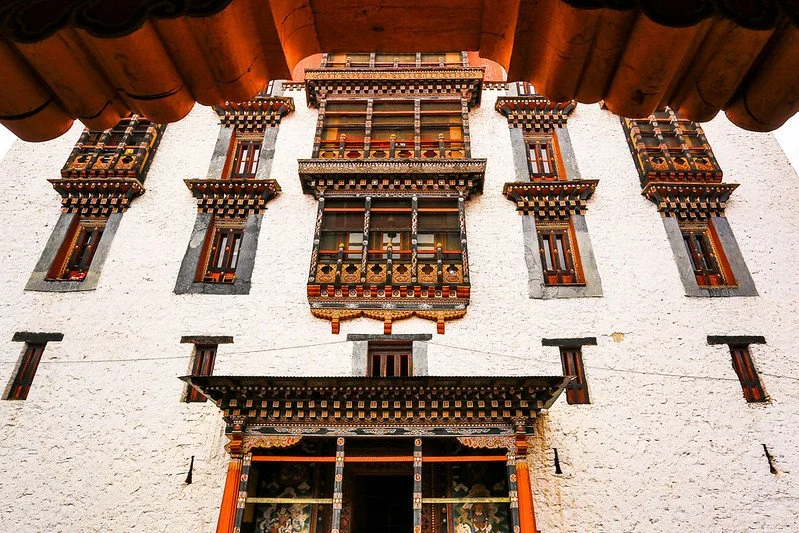
In the afternoon we will visit the spectacular, riverside Paro Rinpung Dzong, which means the fortress on heap of a jewels. Built by Zhabdrung Ngawang Namgyel in 1646 it’s one of the most spectacular dzongs in the country and a brilliant opening to your Bhutan adventure. If you’re not too tired then after the dzong we will head to the 17th Century Taa Dzong (watch tower) which today contains the superb national museum.
Day 2: Thimpu
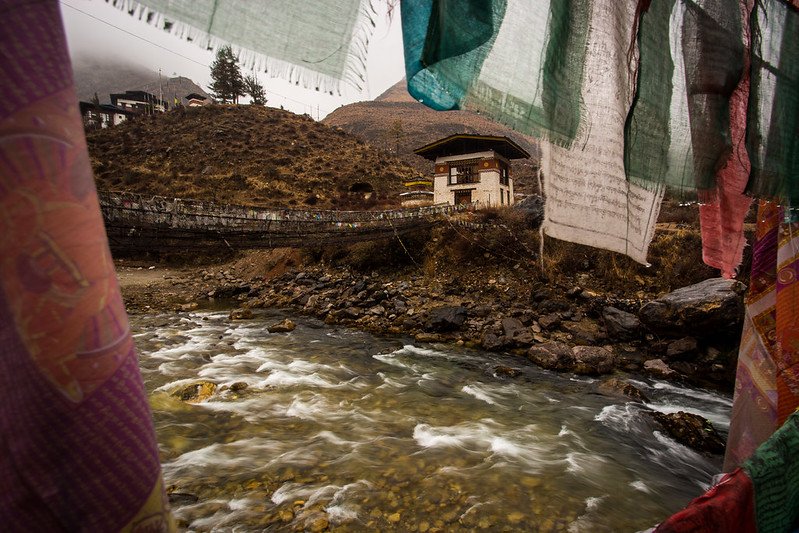
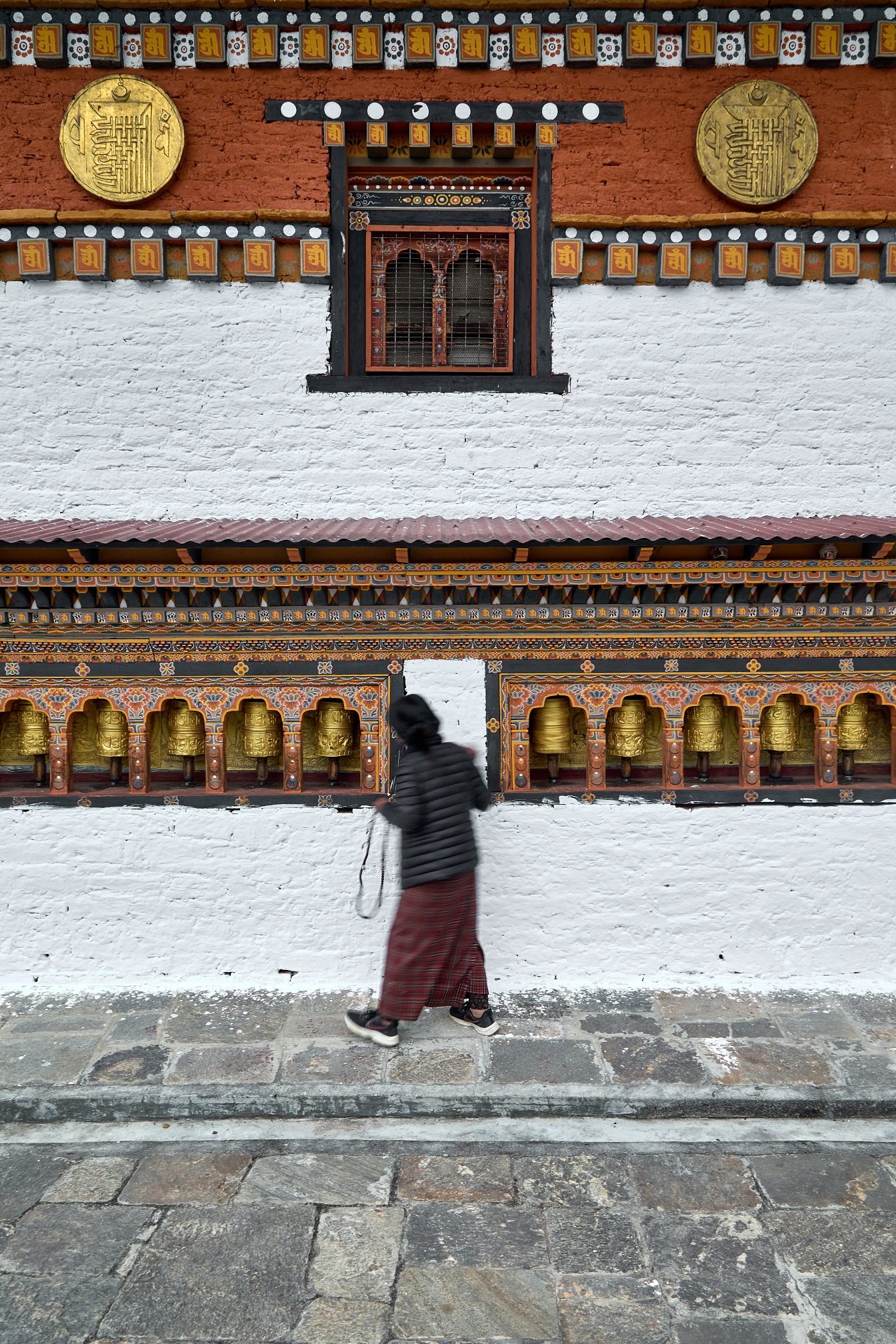
Leaving our hotel after breakfast, we make the short but scenic drive to Thimpu, the tiny capital of Bhutan. The drive only takes around an hour and a half and on the way we stop to explore the Tachog Lhakhang, which is a 15th Century, temple built by saint, miracle worker and engineer (which lacks the magical sparkle of the first two career choices!), Thangtong Gyalpo who is famed for being perhaps the first person to create iron chain suspension bridges. Arriving in Thimpu valley we stop at the Tibetan style National Memorial Chorten. Built in the 1970’s to commemorate the third king it’s visited by many pilgrims throughout the day who make a clockwise kora (circuit) of the stupa while chanting and spinning prayer wheels.
Next on our exploration is a visit to the 12th Century Changangkha Lhakhang, which is another busy pilgrimage site. Many new parents come here to have their baby blessed, an auspicious name chosen by the monks and an astrological reading done. You can also get your own astrological chart done here.
Much of the afternoon is devoted to the stunning 17th Century Trashi Chhoe Dzong. This fortress like structure dominates the Thimpu valley and contains the dragon throne room of the king of Bhutan, the office of the Je-khenpo (chief abbot), and other government agencies. It’s also used as summer residence of the monk body.
At the end of the day we head to our comfortable hotel for the night.
Day 3: Thimpu
Today starts at with an early morning visit to the 51meter high, bronze Shakyamuni Buddha statue from which there are superb views over Thimpu. Next we head to the northern edge of Thimpu and the Pangri Zampa, a large 16th Century temple that houses the College for Astrology. Astrological readings are of great importance to all Bhutanese. Every child is given a life reading shortly after their birth and people visit an astrologer at least once a year and before embarking on any major life event. This college trains up the most talented monks to be astrologers and during a visit you can, if you wish, get your own reading done.
After lunch we set out on a short hike to the hillside Tango Goemba, at the northern end of the Thimpu valley. Founded in the 12th Century (though the current structure is more recent), it’s now a very important Buddhist university. Getting there involves a 45min hike (one-way). After that we walk to the Cheri Goemba on the opposite side of the valley (45min hike) which is one of the oldest monasteries in the country. Neither of these monasteries receive many foreign visitors yet are two of the more interesting in western Bhutan.
We offer two options for the afternoon. You can either take it easy and visit one of the towns museums, go for a bit of shopping at the markets and craft shops or perhaps you just want to relax with a hot stone bath before a night in our comfortable hotel. The other option is a little more adventurous. We hike (2hrs) to the Dodeydra Monastery, a 17th Century complex where the main temple is pushed up against a distinctive rock slab. The complex spreads along the hillside and there are many monks’ resident here. These monks are going to be our hosts for the night because we will be actually sleeping at the monastery and eating with the monks. You will also get to attend the dawn prayer sessions when the monks fill the incense-soaked prayer hall with chanting. The accommodation here is very simple but adequate. While this is a real once in a lifetime experience and not something that many visitors to Bhutan can claim to have done, it won’t appeal to everyone.
Day 4: Thimpu - Haa
Overlooked by most visitors to Bhutan, the wonderful Haa valley, which is just a 4hr drive west from Thimpu, is one of our personal favourite places in Bhutan. The valley contains all that is good about Bhutan. There’s the spectacular mountain scenery – getting to the Haa Valley involves crossing the Chele la Pass (3,988m/12,402 ft); the abundance of monasteries filled with religious treasures, beautiful farming countryside, cliffside chapels laced in magic, fabulous hiking and some of the best homestay-style accommodation in Bhutan. Botanists will also appreciate the chance to see the elusive blue poppy which is unusually common in this valley.
We will visit the ancient white monastery and nearby black monastery before driving up towards the head of the valley to our superb heritage homestay. This is a good place to try a traditional Bhutanese hot stone bath – a great way to relax travel weary muscles.
Day 5: Haa Valley
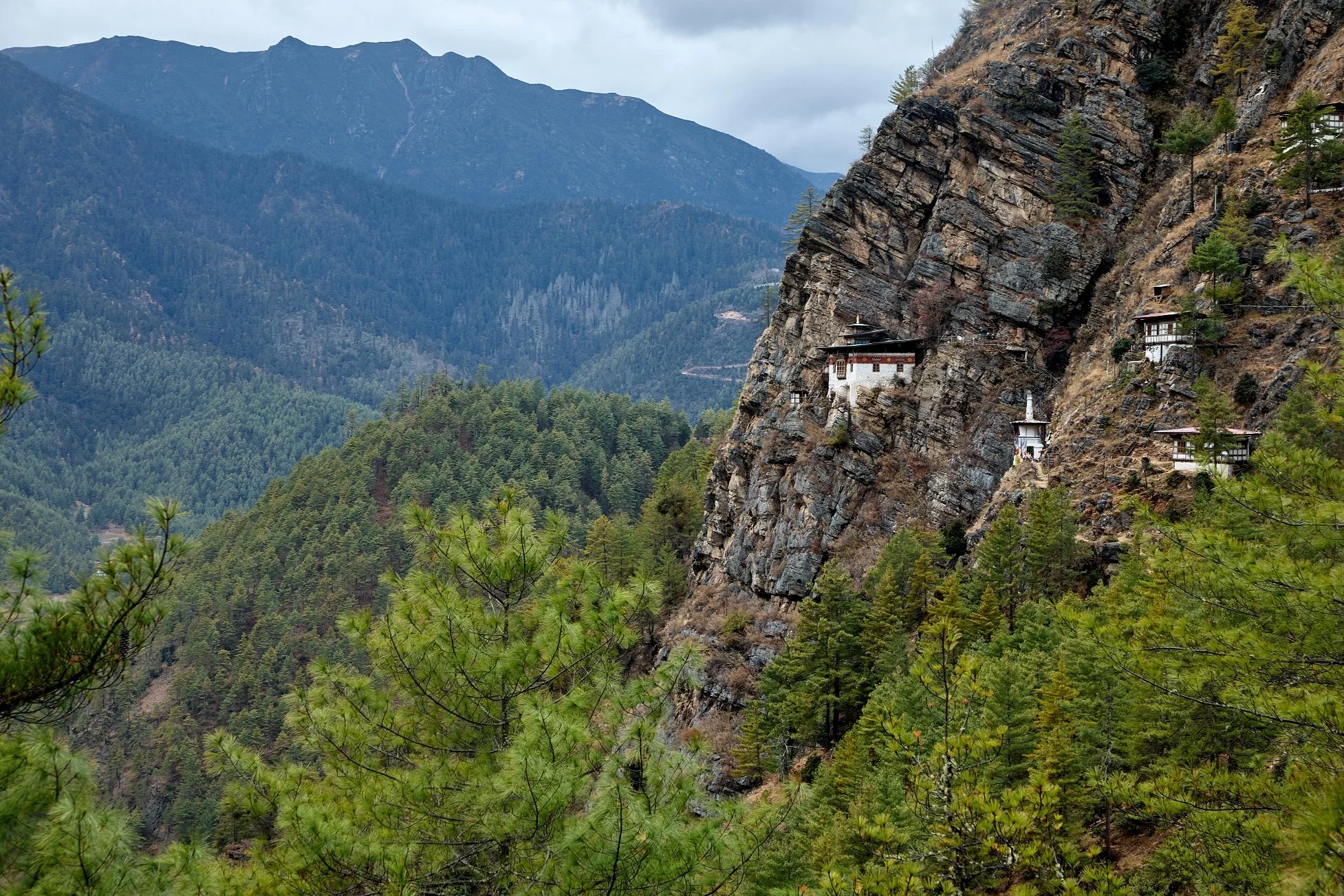
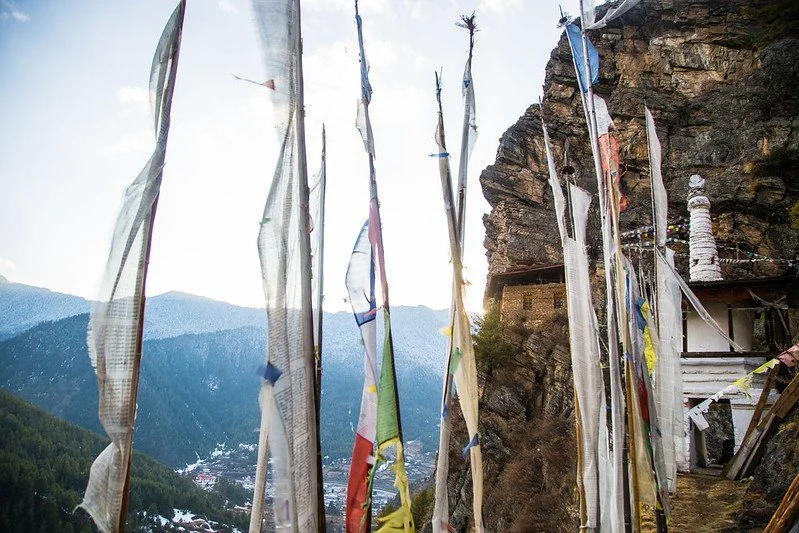
After a big Bhutanese breakfast it’s time to put on your hiking boots as we hit the trail on the recently developed Haa Panorama Hike. This 11km (4.5hrs; shorter versions available if you don’t feel up to the whole hoike) hike weaves through misty, old-growth conifer forests and across a quiet side valley where yaks might be seen to eventually reach the Yangthong Goemba. One of the most important monasteries in the valley we will see if we can spot some of the mermaids said to live in the pool just outside. Failing that, there are always plenty of friendly monks here to chat too. It’s then just a short, steep hike to the extraordinary Juneydrak hermitage. This tiny retreat sticks like a gecko to the sheer cliff face and the surrounding caves and huts are used by nuns engaged in deep meditation. Our guide will explain the fascinating story behind the retreat, that sounds like something out of a fairytale.
In the afternoon we make the short drive to the superbly situated Shelkar Drak, a remote cliff side retreat visited by few foreigners.
At the end of a great days hiking and exploring we head back to our heritage homestay for the night.
Day 6: Haa-Paro
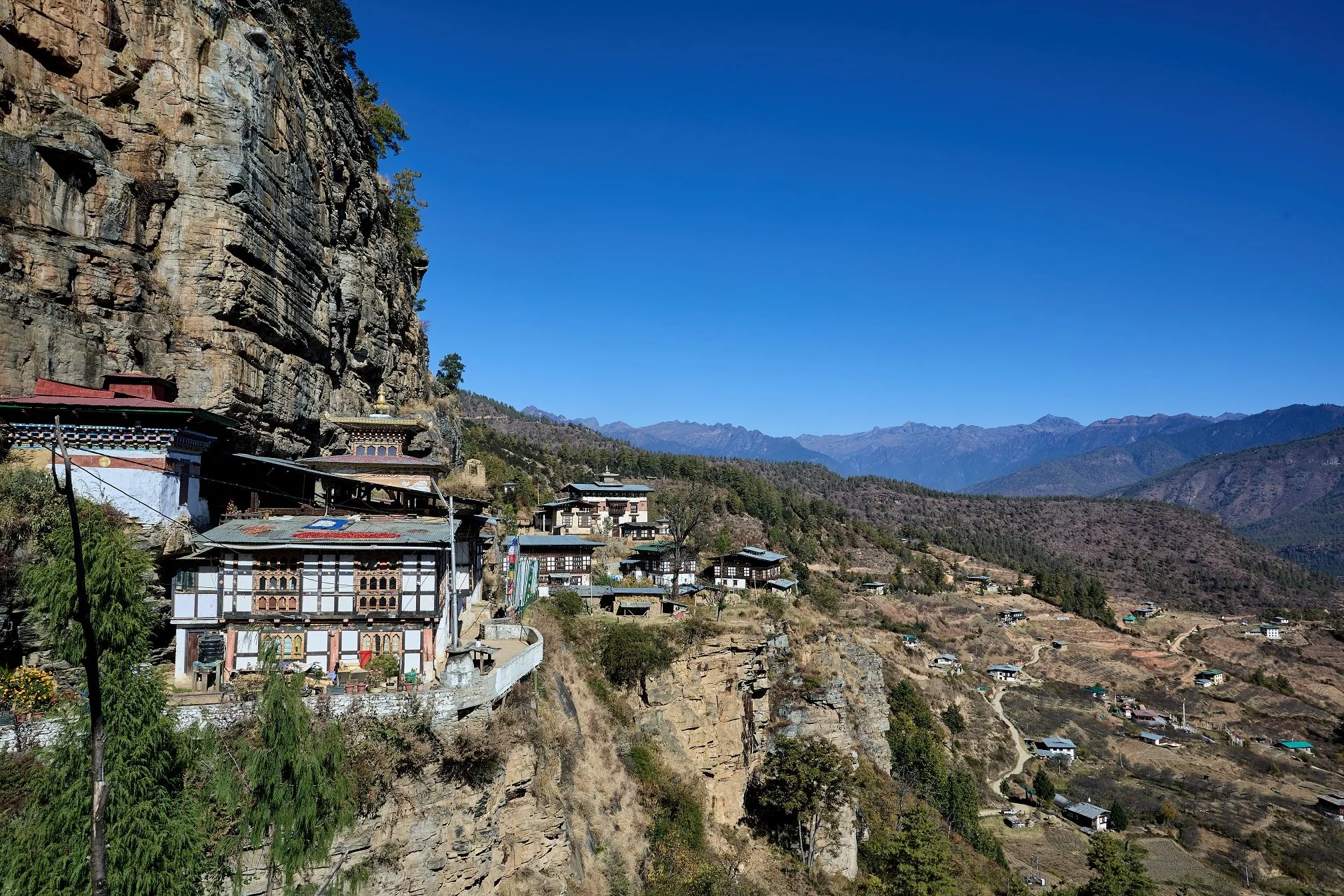
Leaving the Haa Valley for Paro, we stop at the Chele la pass for a short and easy (two hour) hike to the Kila Nunnery. This large complex, which stretches along the cliff face, consists of several chapels and retreats as well as the nuns accommodation. Many of the nuns here spend long periods of time in meditation or chanting and reading the Buddhist scriptures. Those not in mediation though always offer visitors a warm welcome – don’t be surprised if we are invited to sit down and drink tea with the nuns. It’s a great opportunity to learn a little about their lives.
Closer to Paro we will stop at another cliff side chapel complex, Dzongdrakha Goemba. Although this complex is close to Paro and sometimes described as a mini–Tigers Nest, it receives very few foreign visitors - all the better for us. Ninth century Tantric Buddhist master, Guru Rinpoche is said to have battled demons here during his many visits to Bhutan. During our last research visit (early 2025) much of the complex was undergoing renovations but it’s still worth a visit just for the views down towards Paro.
We will arrive in Paro in the early evening to check into our hotel.
Day 7: TAKTSHANG MONASTERY (TIGER NEST) HIKE
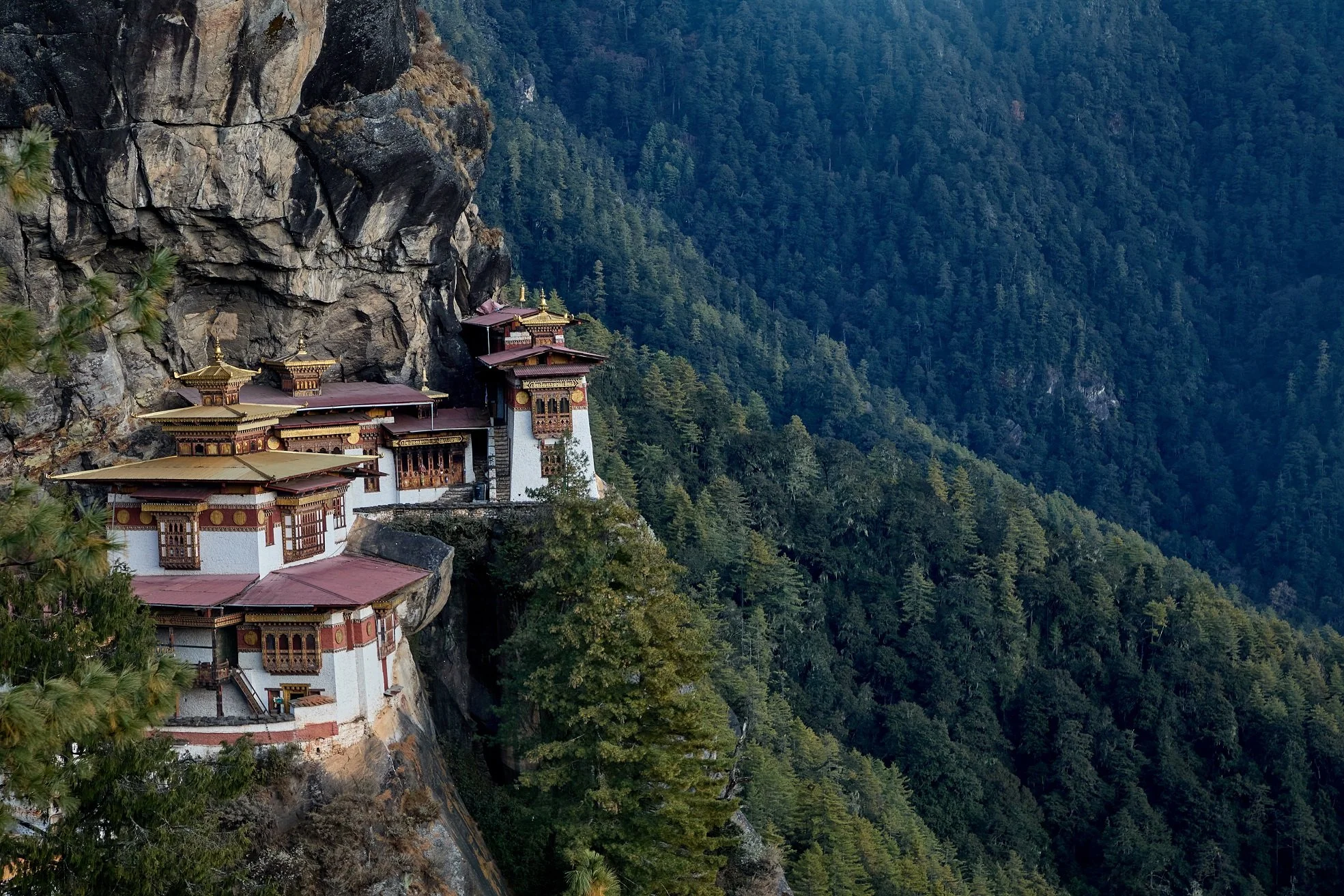
Your final full day in Bhutan is a big one! After breakfast we hike slowly up to the spectacular Taktshang monastery, which is more commonly known as the Tigers Nest Monastery. For many people, Taktsang was the reason for coming to Bhutan in the first place. The 8th Century (much rebuilt since then) cliff ledge monastery plays a big part in Bhutanese culture. This was one of the places where the saint, Guru Rinpoche (Padmasambhava) meditated with his consort Khandro Yeshey Tshogyal. It is believed that the Guru flew on a female tigress in pursuit of a demon which he subdued at the site. It is one of the holiest sites in Bhutan and the most important cultural icon of the country. The hike up to the monastery is technically easy as it follows a wide and well-trodden trail but it’s quite steep in places and it takes most people about five hours for the return hike with time to explore the complex.
If time allows, our last afternoon in Paro can be spent exploring some of the many other chapels and monasteries in and around the town including the stunning Kyichu Lhakhang, which is one of the oldest, most beautiful and most important religious sites in Bhutan.
Overnight in a Paro hotel.
Day 8: Departure
Almost all flights leave Bhutan in the early morning so after an early breakfast your guide and driver will take you to the airport for your flight home or to further adventures in India or Nepal. And, don’t forget that Samgai Journeys offers a range of exciting tours and treks in both of these countries.