Manaslu: Nepal’s Greatest Trek Itinerary
Day 1: Arrive in Kathmandu
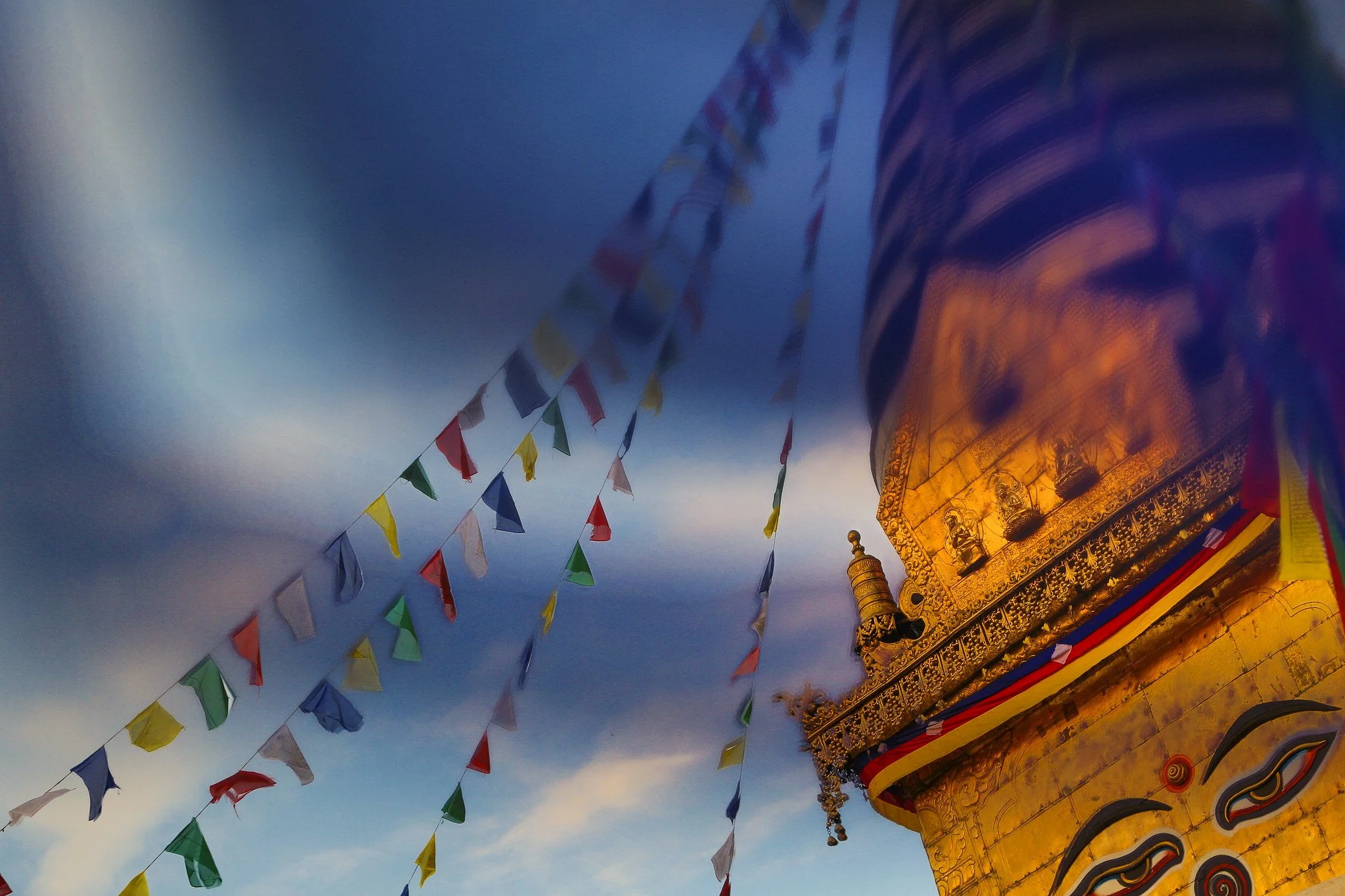
Once you arrive in Kathmandu, you will be greeted by our representative at the airport. You will be driven to your hotel in a private vehicle. Check in, enjoy a welcome drink, and get refreshed.
Later in the day, there will be a trip briefing, where you will be introduced to your guide. Your guide will talk briefly about the trek, the route you will take, and the important things you need to keep in mind while trekking. Depending on the arrival time there will also be a late afternoon visit to the Swayambhunath stupa. This iconic Buddhist stupa sits atop a hill with views across the Kathmandu Valley. The stupa is heavily entwined into the creation myths of the Kathmandu valley and is an important buddhist pilgrimage site.
Day 2: Drive to Machha Khola (900m)
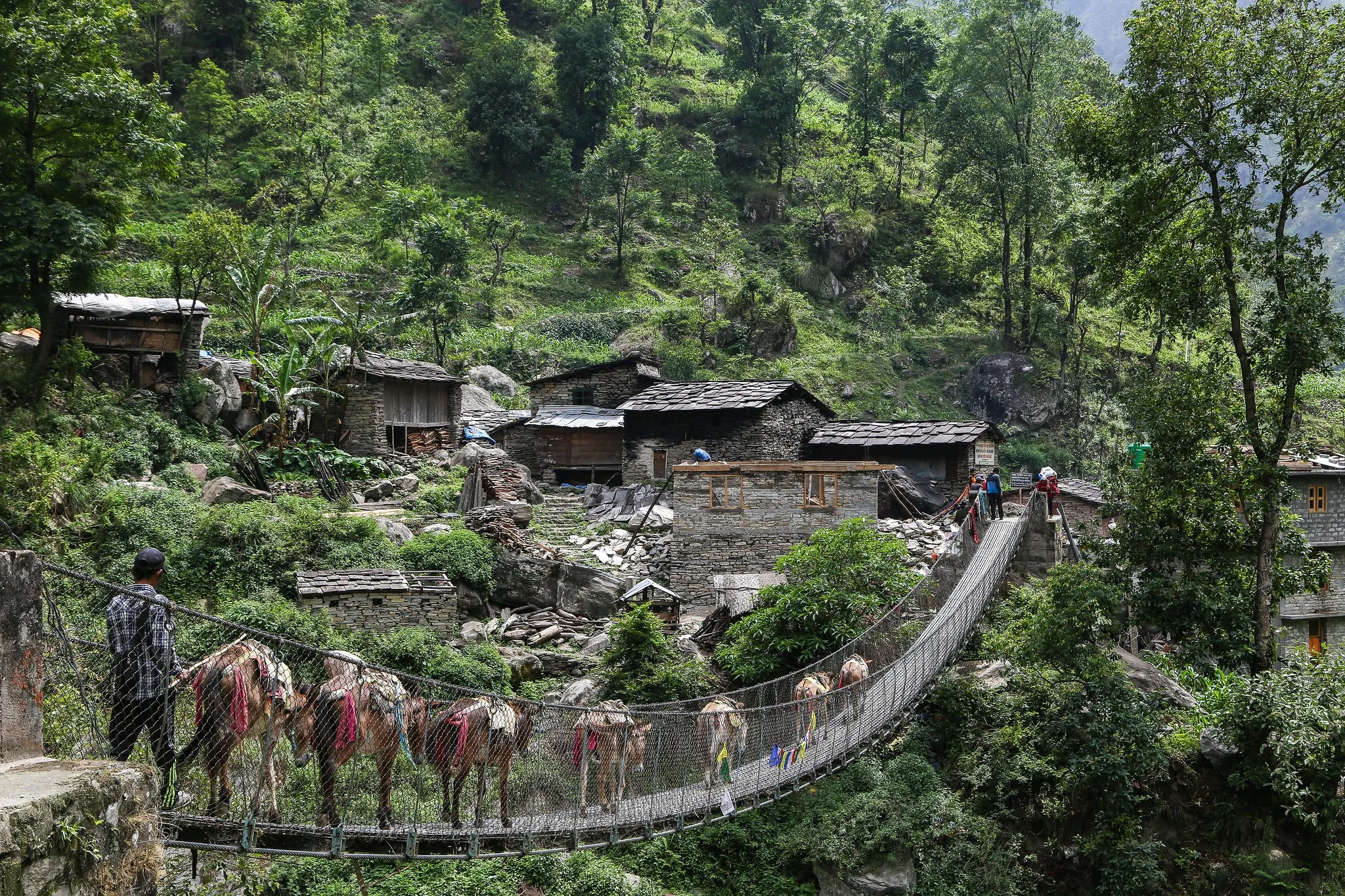
After breakfast, we leave Kathmandu by private jeep for the long (6-7hrs) but scenic drive to Machha Khola, a small market village set in a lush sub-tropical valley from where we will begin our trek. We will stop off for short breaks during the drive and will take lunch in a small town along the way. Depending on what time we reach Machha Khola (900m) we will spend a while exploring the village before dark. Overnight in a basic guesthouse in Machha Khola.
Day 3: Trek to Jagat (1410m; 6hrs)
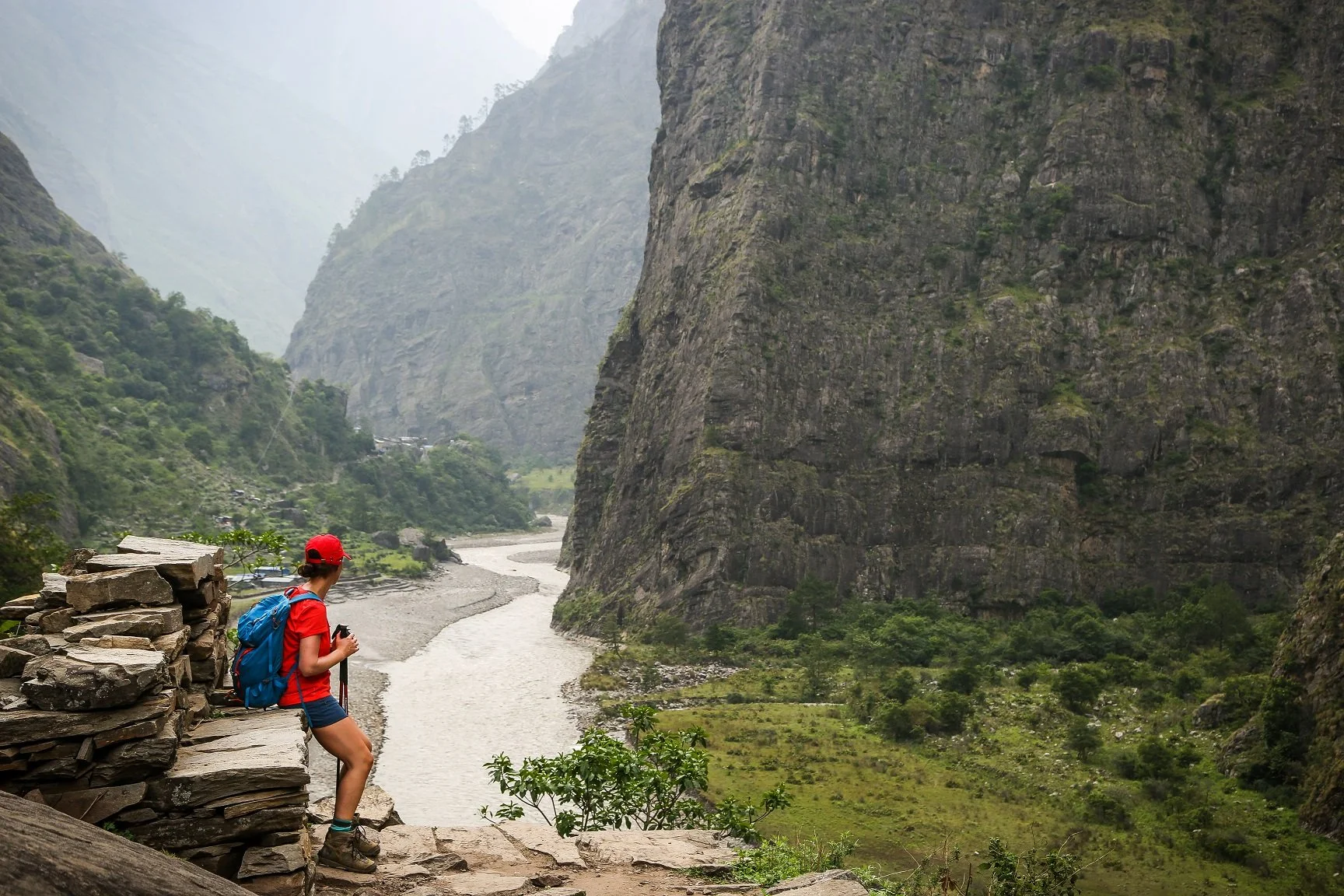
Leaving shortly after breakfast our adventure begins by crossing over a river and then follow an undulating trail that heads up the river valley. Eventually, we come to the tiny village of Khorlabesi where we an pause for a cup of tea. Following a few more ascents and descents, we’ll come to the hot spring in Tatopani. Bring your swimming things and you can relax in the piping hot water for a while. The route then switches to the opposite bank of the river via a large suspension bridge. Climbing a wide, well-crafted staircase, we reach the tea houses at Doban after passing through a short section of forest. After crossing another suspension bridge over the Yaru Khola, we climb again over a ridge, trek along the river, and ascend towards the beautiful village of Jagat (1330m; 6hrs from Machha Khola).
Overnight in Jagat.
Day 4: Trek to Deng (1860m; 6-7hrs)
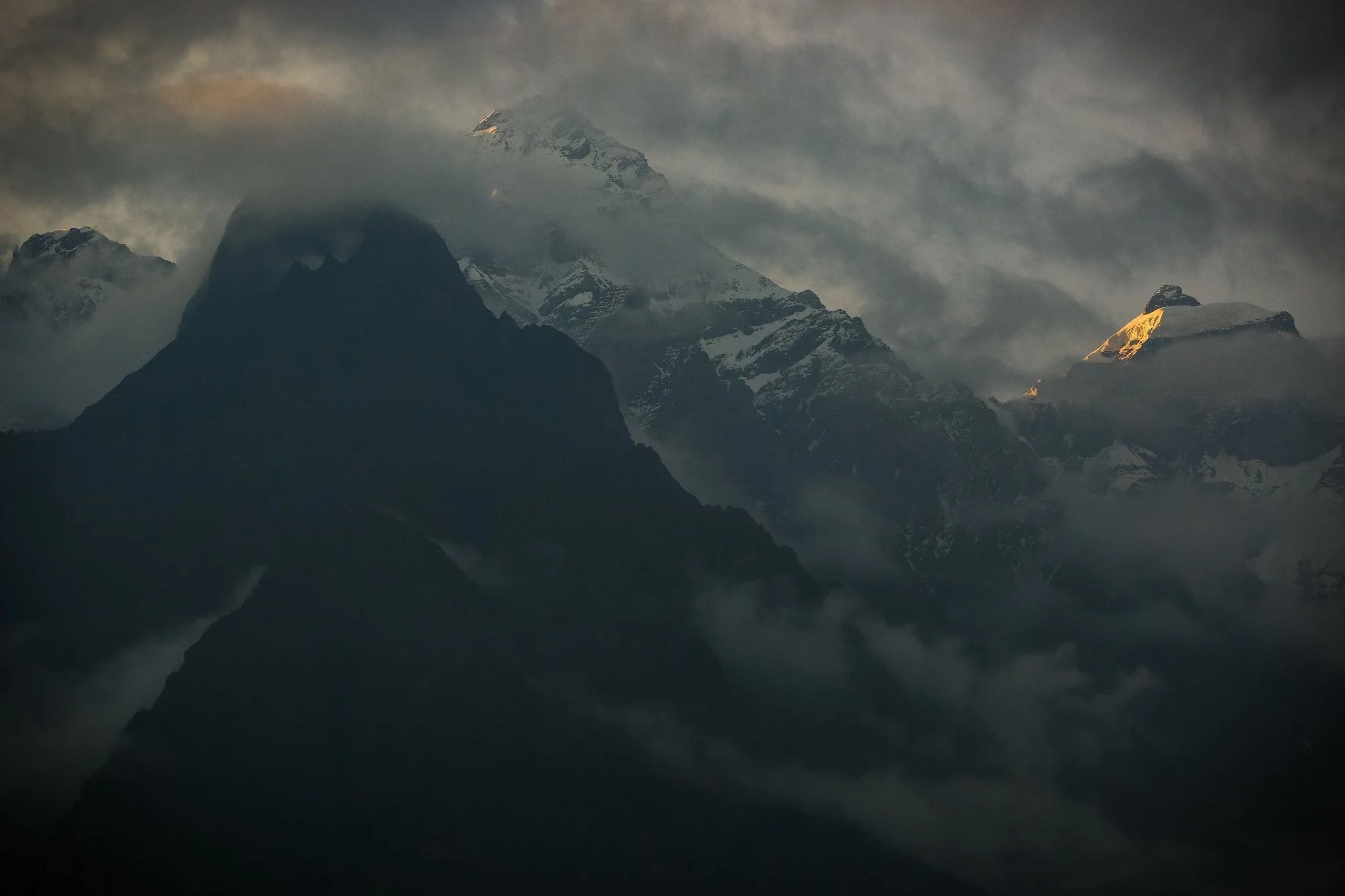
We start the day descending to the riverbank via a lengthy series of stone steps followed by a long climb back up a hillside with terraced fields to the village of Salleri. It’s around here that we will (if it’s clear) get our first views of the big mountains when the little explored Sringi Himal (7187m) comes into view. Descending from Salleri, we reach Sirdibas. The valley widens as we approach Ghatta Khola. Crossing the river via a big suspension bridge, we climb steeply to Philam, a sizable Gurung village. After here the landscape starts to become more Alpine with conifer trees and bamboo forests replacing the decidieous trees of lower altitudes. This next section of trail rewards us with waterfall views and ever larger mountains. The trail continues along the west bank of the river before crossing to the east and then back again. After six or seven hours of walking we reach the small village of Deng (1860m).
Overnight in Deng.
Day 5: Trek to Namrung (2660m; 5-6hrs)
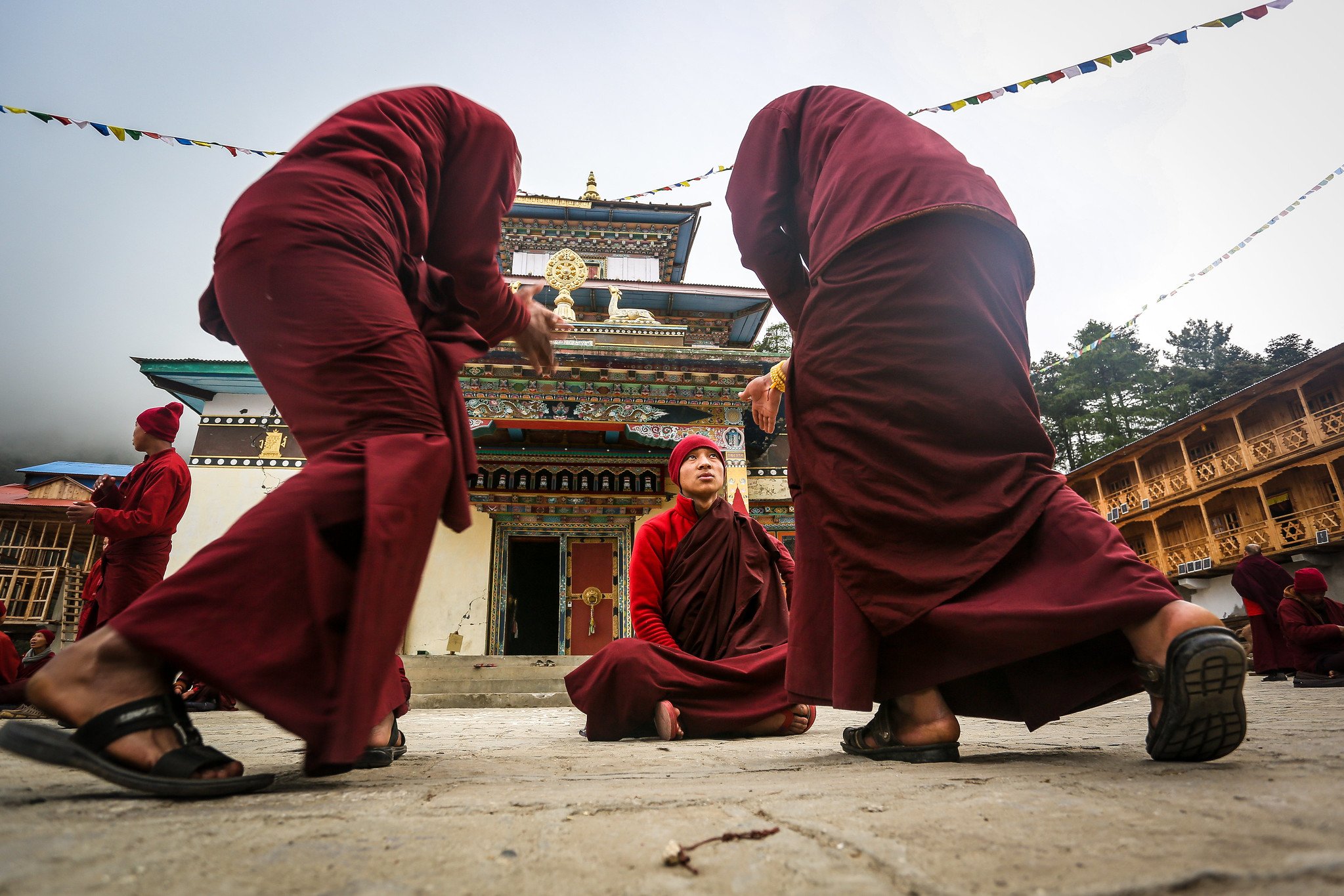
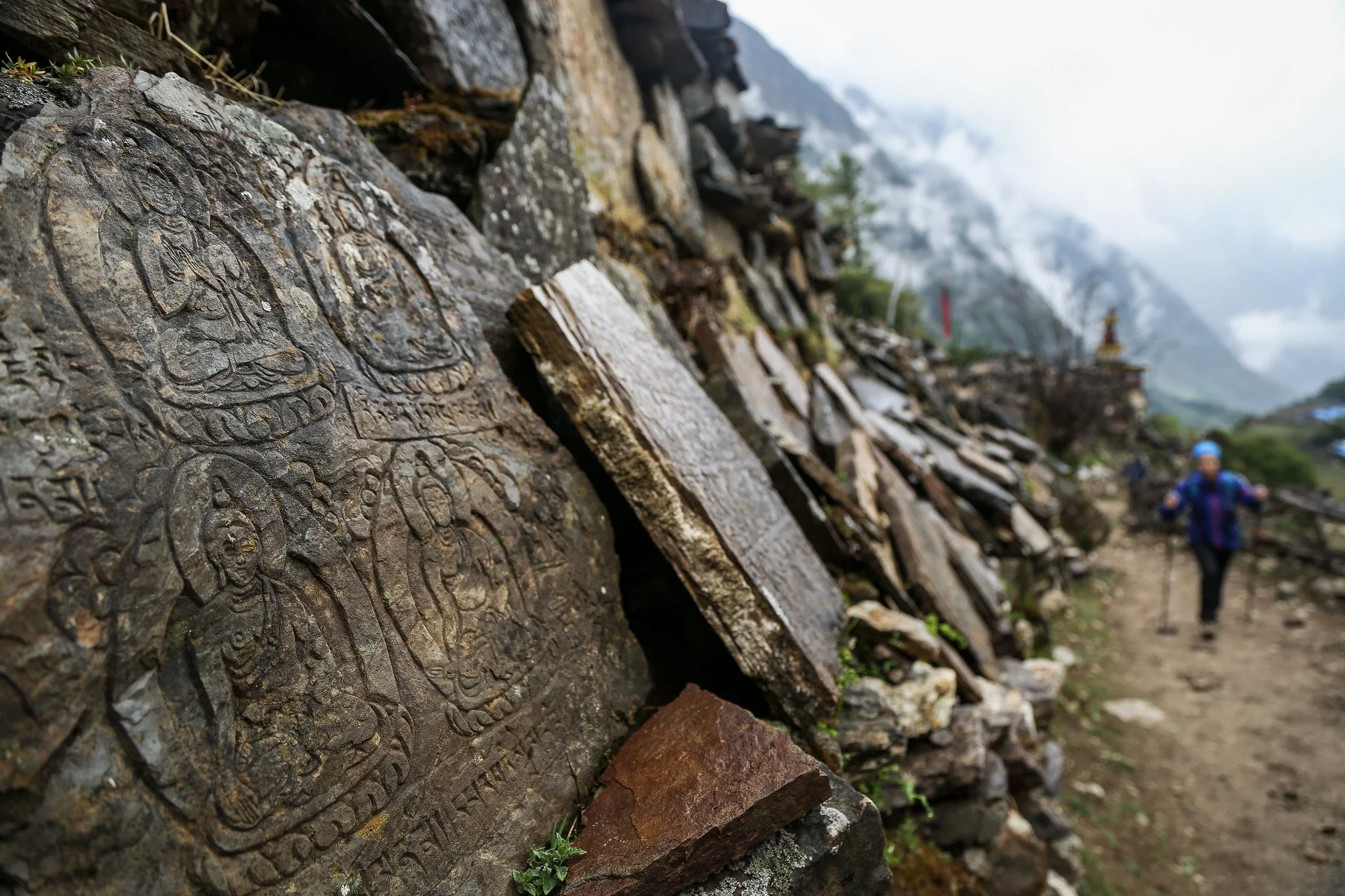
The day begins with a 40 minute descent down to and then over the Budi Gandaki river. We then climb again for around an hour to the village of Bhi and as we do so the river valley starts to bend slightly more to the west and we cross an invisible dividing line between the warmer and more fertile Hindu areas that we’ve enjoyed over the past few days to a higher altitude, colder Tibetan Buddhism influenced zone. The trail meanders past impressive mani walls before eventually turning towards the village of Ghap, with it’s heavy Tibetan cultural influences. The trek from Bhi to Ghap typically takes around two and a half hours. Alternatively, you can opt for another route via Prok village, known for its stunning viewpoint overlooking Siringi Himal. After a pause in Ghap, the route follows the river upstream through dense forests, providing a pleasantly cool trekking experience as you ascend into the alpine forests of pines and junipers. Crossing the river once more and we ascend a steep staircase that leads us to the village of Namrung (2580m), which is one of our favourite villages passed through on the whole trek. Surrounded by fields and topped by a small Buddhist monastery, this is the first place from where there are clear views of the distinctively shaped Manaslu (8163m). Depending on what time we reach Namrung we will go and visit the monastery. if we are lucky our visit will coincide with the lively religious debates held by the monks in the monastery courtyard.
Day 6: Trek to Lho (3180m; 4-5hrs)

Our walk starts off with stirring views of Sringi and Ganesh Himal, along with Himal Chuli to the south. The trail, which climbs steadily, leads through barley fields and livestock pastures to arrive at the picturesque village of Lihi (2920m), known for its array of chortens and terraced barley fields. Continuing onward, we cross a stream fed by the Lidanda Glacier and pass through the Tibetan-influenced village of Sho. Just beyond, a breathtaking vista of Manaslu North and the towering peak of Manaslu itself unfolds. Continuing onwards we reach the village of Lho, which is notable for its monastery, adorned with numerous chortens, mani walls, and an ornate white stupa, offering unparalleled views of Mt. Manaslu. While we are here we will make time to explore the renowned Ribung Gompa.
Day 7: Trek to Samagaun (3530m; 3-4hrs)
Today is a more gentle day. After a big breakfast we set out on a trail that soon leads us through Shyala village, where we can spend some time exploring the gompa and surrounding village. It’s then just a short onward walk to the pretty stone village of Samagaun (3480m) where we will find ourselves surrounded by towering peaks such as Himal Chuli and Peak 29 (Nagi Chuli) to the left, the impressive Manaslu and its glaciers straight ahead, and Ganesh Himal in the distance to the east. Having an altitude of over 3500m you might start to feel the effects of the thinner air here. But, due to the gentle pace with which we have gained altitude on this trek it’s unlikely that you will suffer any major altitude related problems.
Overnight Samagaun
Day 8: Pungyen Gompa (4070m; 4-5hrs)
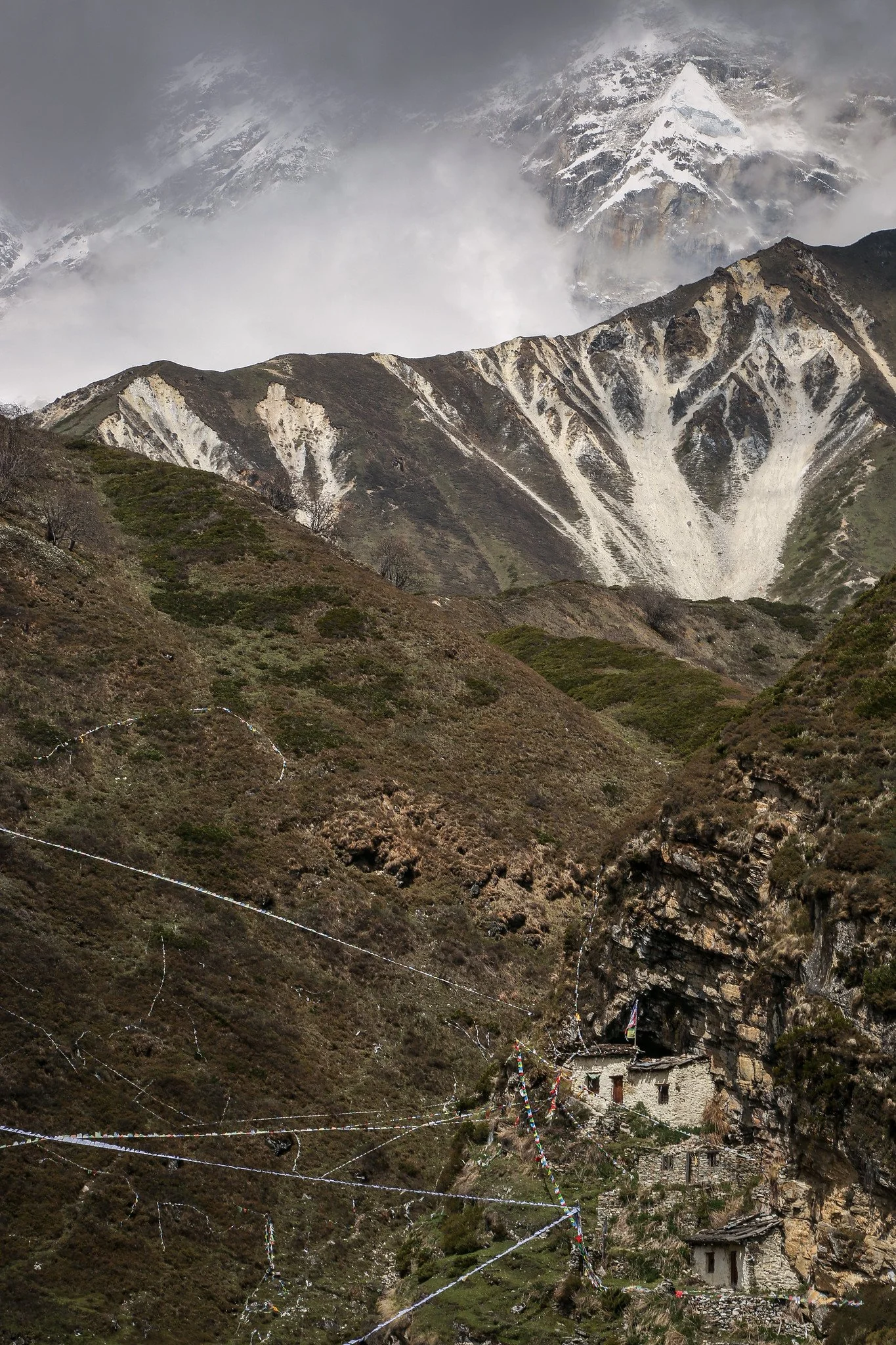
The first of our compulsory acclimatisation days, this one, which is a hike to the Pungyen Gompa (4070m), also happens to be one of the most impressive. To get there we have to return a short way down the trail we walked up yesterday before branching off west onto a path that climbs quickly up to a high, cold grassland plateau where yaks can often be seen grazing and shepherds set up summer encampments. The tiny gompa sits out in the middle of these grasslands while behind, and clinging to the stark cliff face, are further small chapels and monks meditation retreats. Behind them all rise the mighty ice walls of Manaslu and Ngadi Chuli (7879m).
We return to Samagaun for the night.
Day 9: Birendra Tal and Manaslu Basecamp
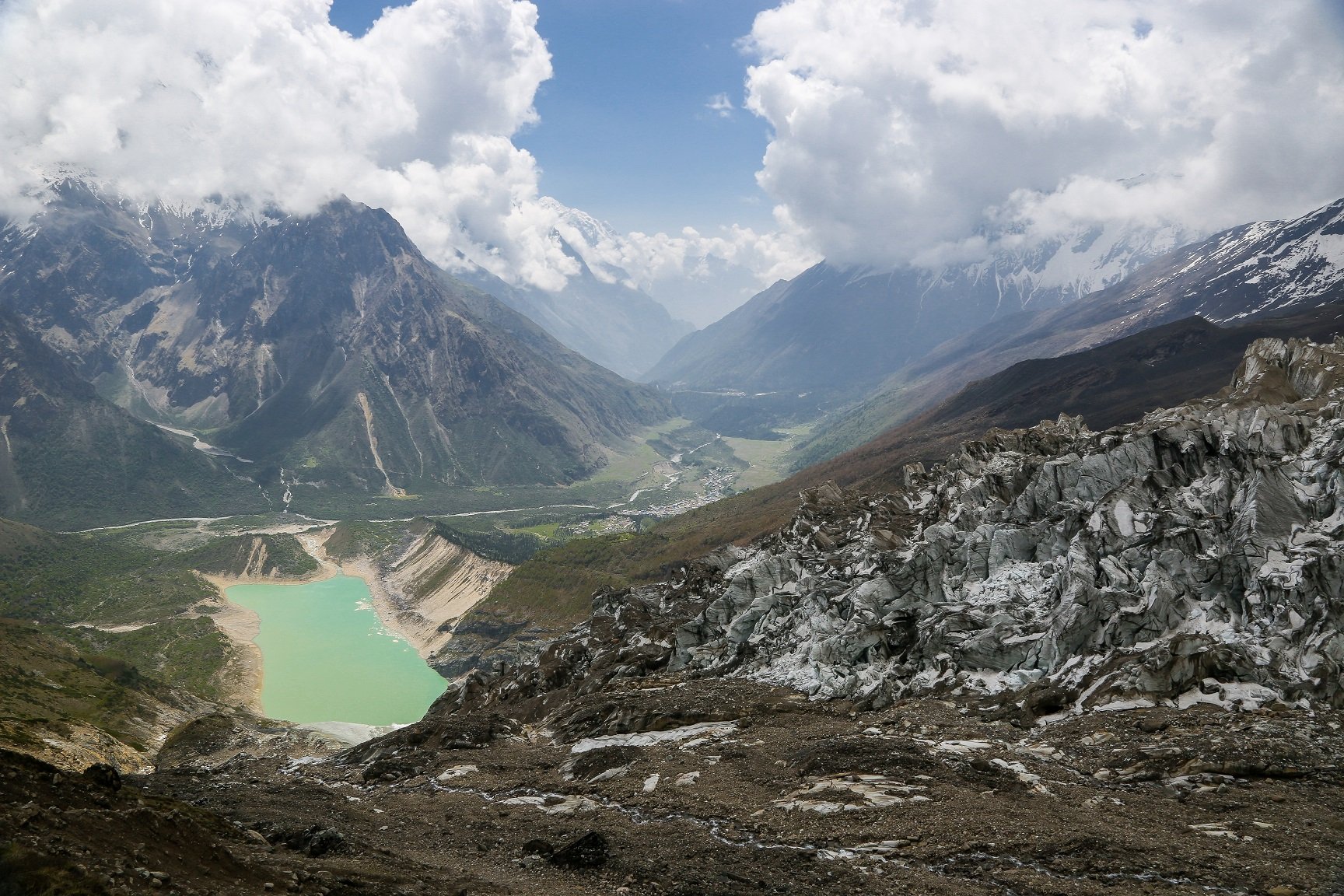
Unlike most tour companies we include an additional acclimatisation day in Samagaun. Although it’s not strictly neccassary we find it makes the following days easier and, having travelled and hiked so far, we feel it’s better to take full advantage of the stunning scenery on offer. Today we have two options available. The first is a simple walk out of Samagaun to the lake of Birendra Tal (3450m), which lies hidden in a shallow bowl at the foot of the glaciers pouring off the side of Manaslu. We can either just relax around the lake shore before returning to Samagaun or continue up towards Manaslu Basecamp (4900m). Getting to the actual camp itself is a very serious undertaking that involves walking across a part of the glacier itself and involves a significant elevation gain. Instead, we climb onto a ridge above the Birendra Tal lake which directly overlooks the glacier. It takes a couple of hours from the lake shore. The view is simply out of this world. We then return back the way we came to Samagaun.
If you wish to reduce the duration of this trek by a day then we can drop this acclimatisation day. It would also be possible to visit the lake on the way to Samdo.
Overnight in Samagaun.
Day 10: Trek to Samdo (3865m; 2-3hrs)
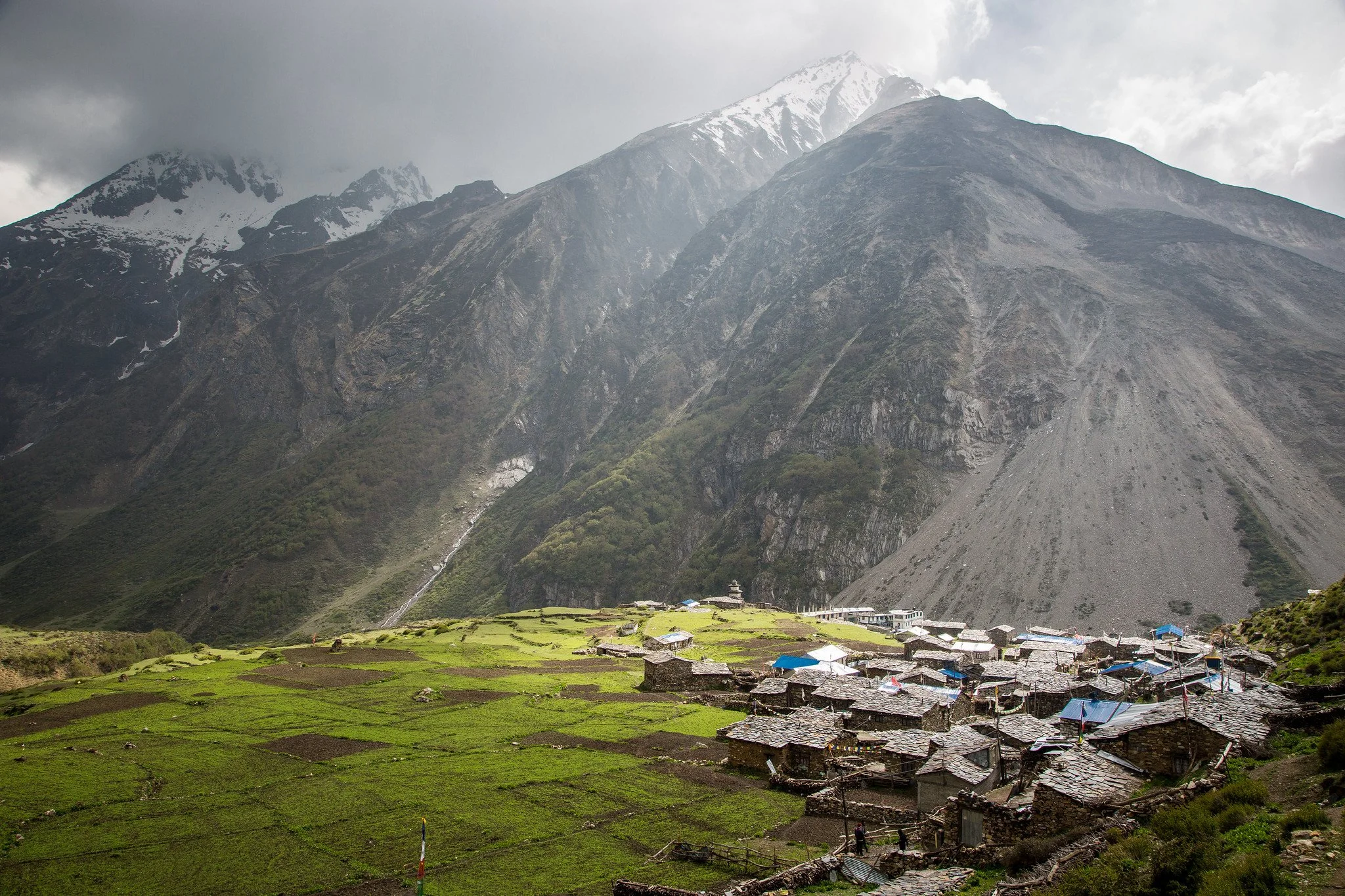
Samdo is the highest permentely inhabitated village that we pass by on the Manaslu Circuit. The path we take gently winds along a shelf above the river, passing through the juniper and birch forests surrounding the Kermo Kharka (kharka means pasture and indeed you might well see yaks grazing here). Descending from the shelf, we cross the Budhi Gandaki on a sturdy wooden bridge and ascend steeply to a promontory nestled between two branches of the river. Crossing to the east bank, we soon arrive among the stone houses of Samdo (3860m), which, despite its remotness is larger than you might expect.
Overnight in Samdo.
Day 11: Fukang Glacier/Tibet Border
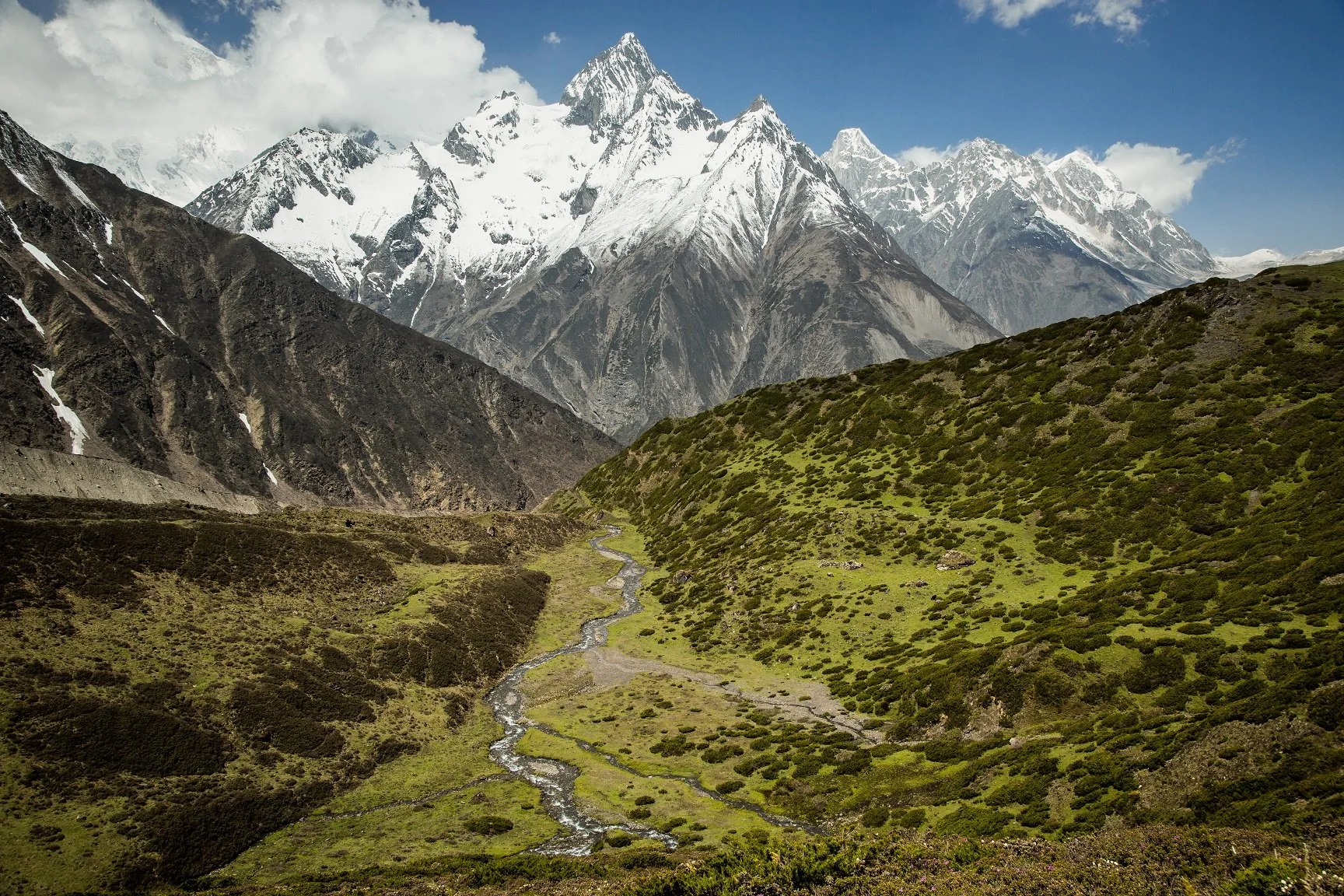
Today is another rest and acclimatisation day. We have two options. The most dramatic is to follow the main trail north out of the village for a short way and then veering off onto a minor side trail walk to the glacial moraine overlooking the Fukang Glacier. The uninhabited landscapes here are wild and barren and imposing. The second, gentler, option is to follow the fertile valley east out of Samdo past fields and high pastures that lead to the border of Tibet (restrictions mean we cannot approach too close to the border). The views back down towards Samdo and the Manaslu massif beyond are superb. Overnight in Samdo.
Day 12: Trek to Dharmasala (4470m; 3hrs)
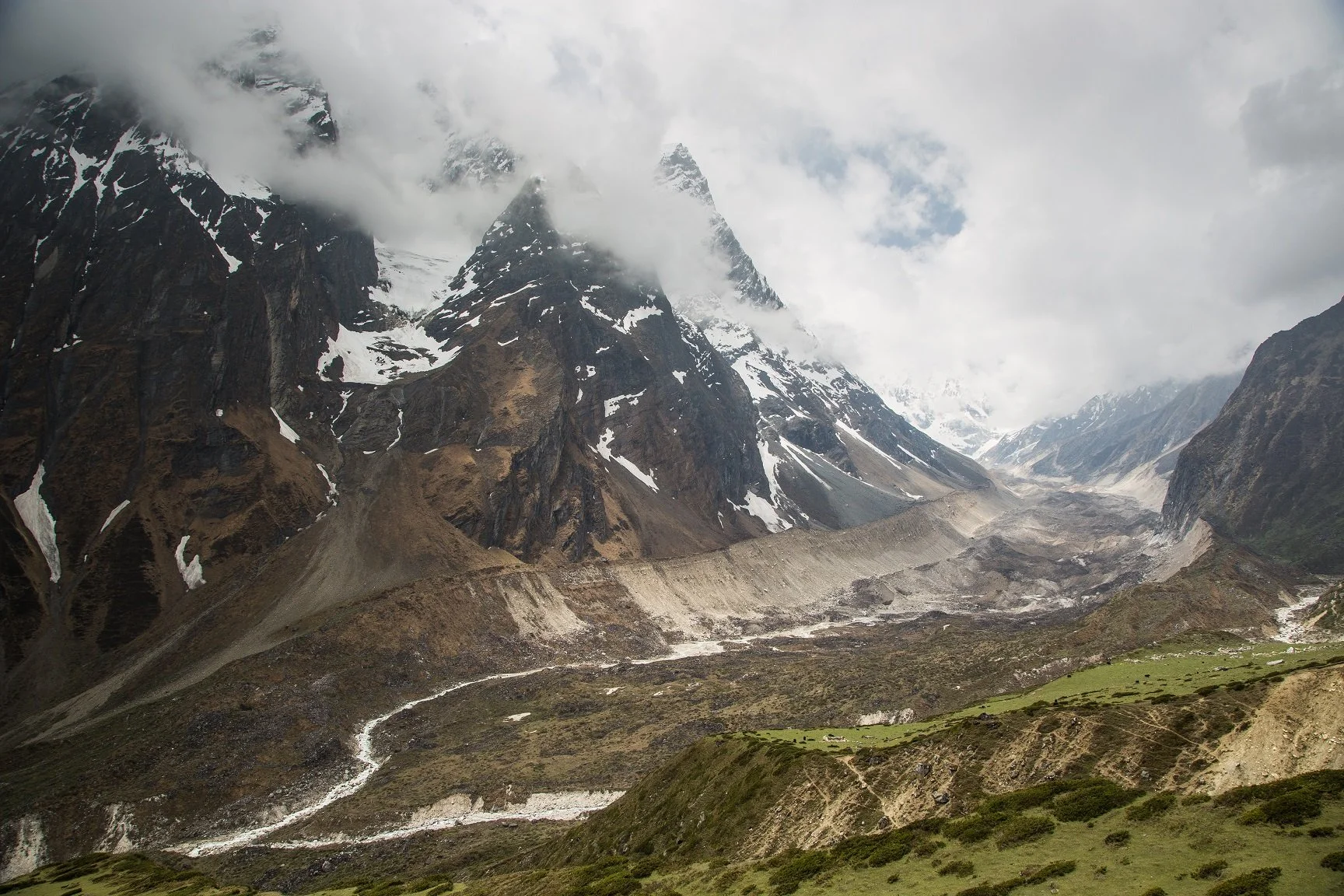
Today is another short day so we will set out a little later than normal. Leaving Samdo we cross a wooden bridge over the Budhi Gandaki and begin steadily ascending. Crossing another stream that flows from Gya La, a pass leading into Tibet, we pass through the village of Larkya Bazaar. Moving on we head towards the massive Larkya Glacier and Dharmasala (4450m), which is also known as Larkya Phedi (The Foot of Larkya). This cold and bleak spot marks the starting point for the ascent up to the Larkya La pass. But that’s for tomorrow. For now we will stay in Dharmashala. The accommodation here is very, very basic. It’s simply a fixed-tent style lodge with multiple dorm beds and zero other facilities. It’s well worth taking a short climb up one of the grassy slopes behind Dharmashala for the epic mountain views.
Day 13: Trek To Bimthang (3740m; 7-9hrs) Via Larkya La (5106m)
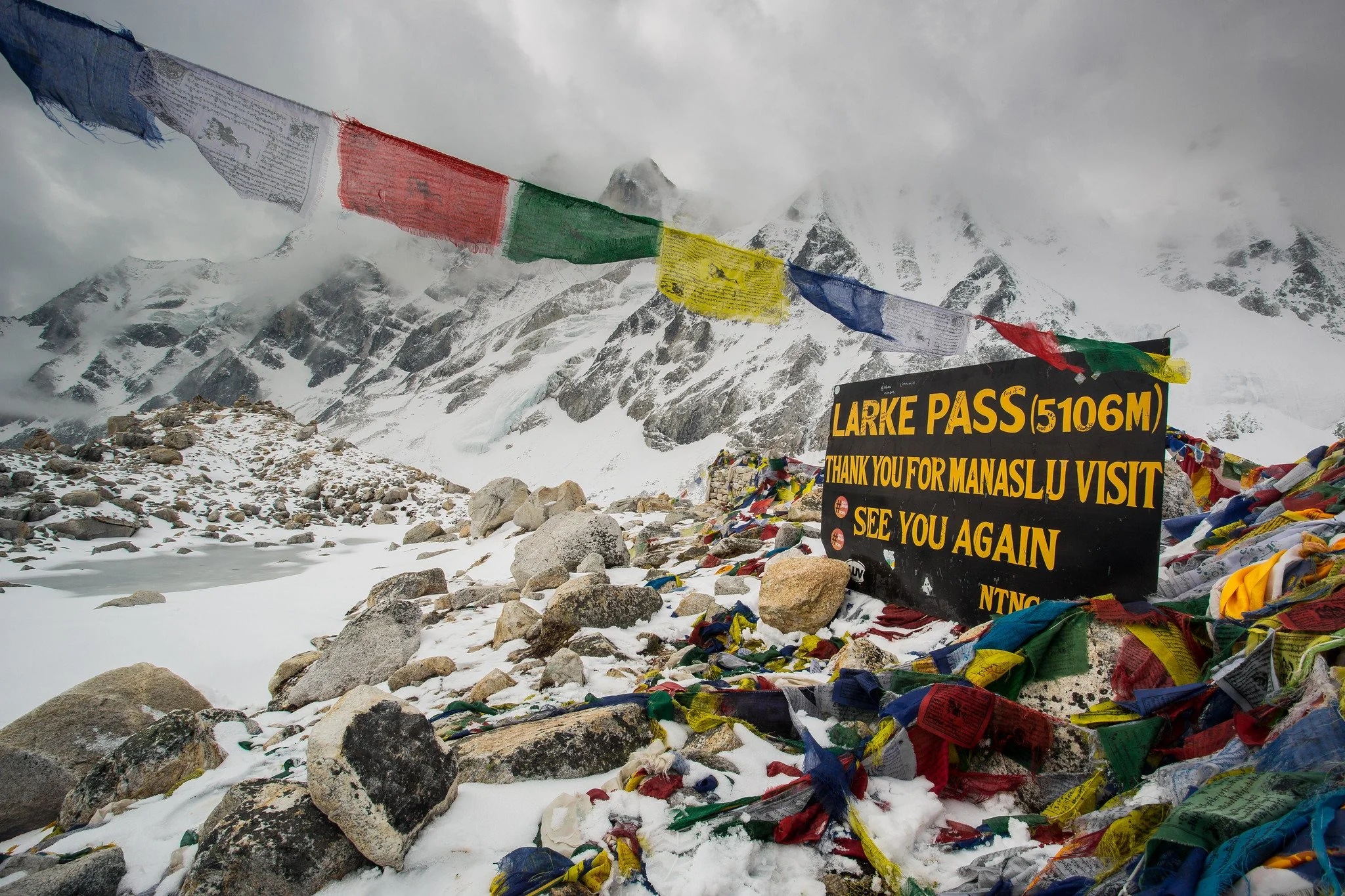
This is a long, hard day, but it’s the moment we’ve been building up to and the culmination of this epic trek. We set out very early along a trail that’s steep and rocky, with some snow patches likely. It’s challenging but the views of Manaslu and other towering mountains are more than enough compensation for the effort. Eventually, we reach the high point of the trek, the Larke La pass (5106m). Surrouned by prayer flags, we will take time to enjoy the moment and soak in the best mountain views of the trip while enjoying a snack and hot cup of tea. Descending the opposite side of the Larke La is a little tricky, with loose rocks, ice (we will carry crampons in case they’re needed) and steep slopes. Although we are now slowly leaving the high mountains there’s always a sense of excitment that the hardest work is behind us and that with every step the air will get warmer and more oxygen rich.
As we descend, the landscape changes from rocky terrain to meadows full of colorful wildflowers. We cross streams and glaciers on our way to Bhimtang (3740m), a village of stone houses and grazing yaks. After such a tiring, but rewarding day, we will settle down in a cozy teahouse for the night.
Day 14: Rest Day At Bimthang/ Spare Day
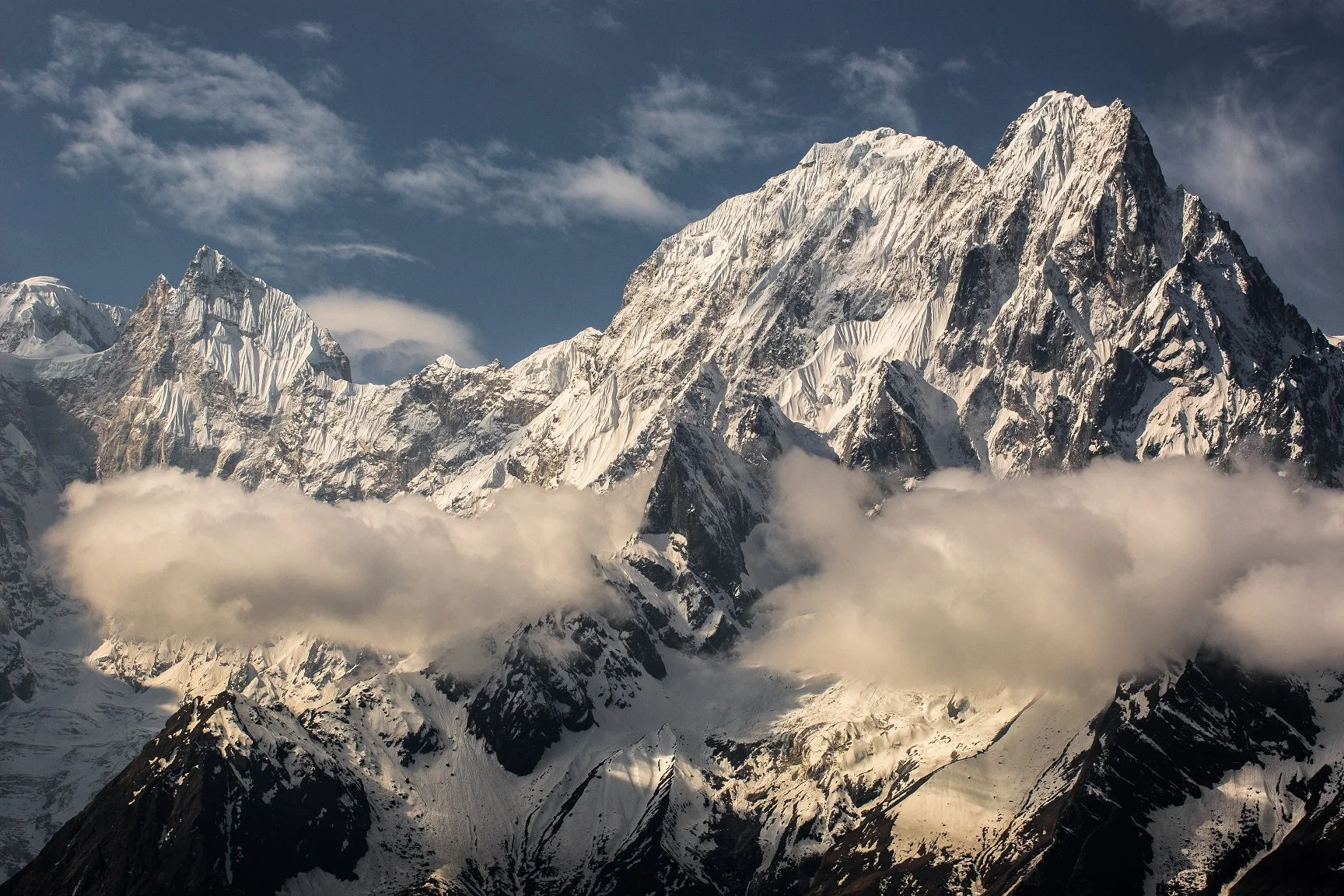
Today is something of a rest day or a spare day in case weather or other reasons meant that we were unable to make it over the Larke La yesterday. We can explore Bimthang and its surroundings. From the edge of the village there are superb views of Himlung, Cheo, Kangguru and Annapurna II and we can head back up the valley a short way to a high altitude half frozen lake, Pungkhar Tal. We spend the night in Bimtang. If you have energy to spare then it’s also possible to push on halfway down the valley today so as to make tomorrows hike half the length. If you opt to do this then we would overnight in the village of Gho (2560m).
Day 15: Trek to Dharapani (1920m)
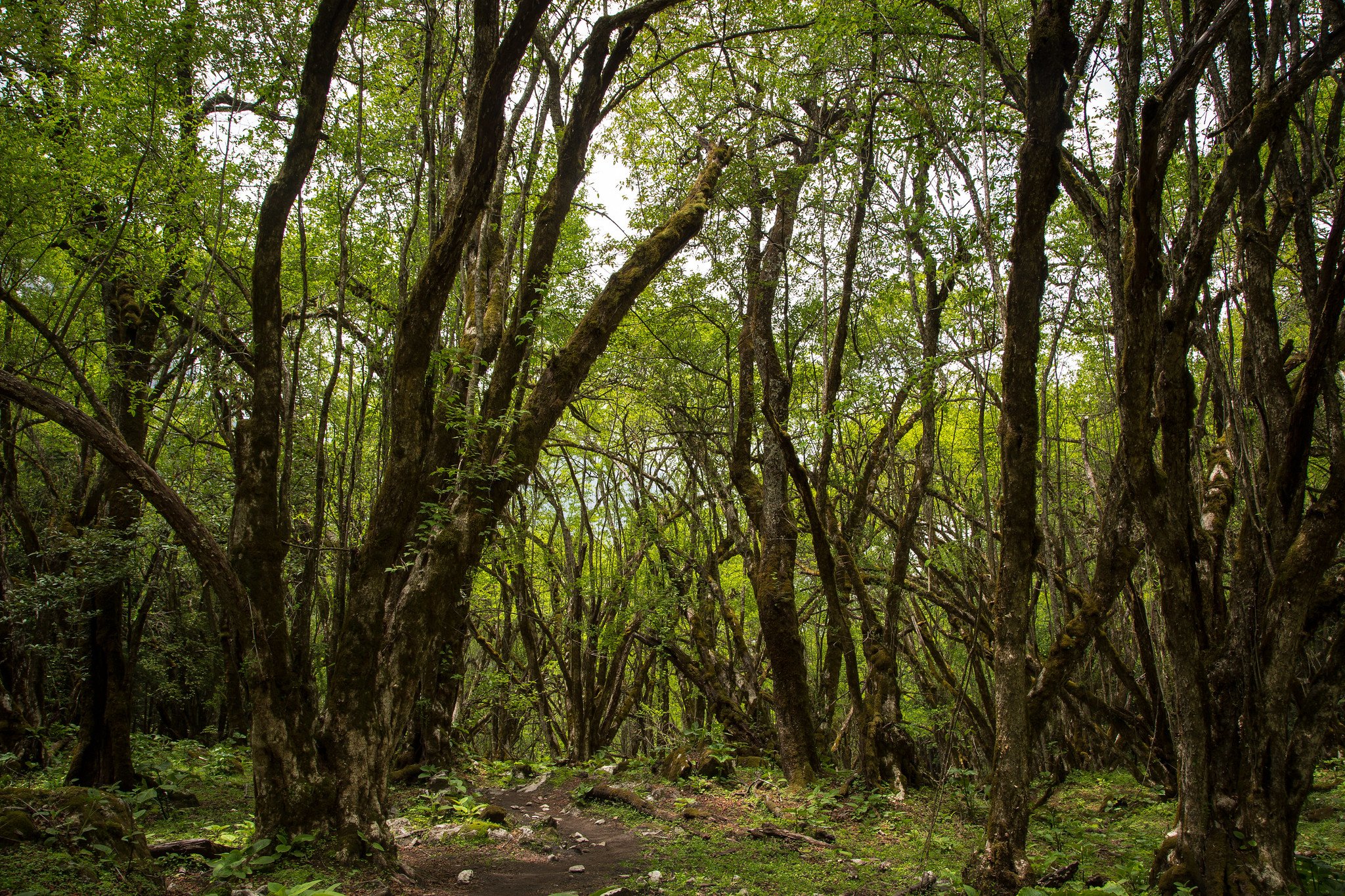
We’re going to see some big changes today! Leaving Bimtang we cross a high pasture (Sangure Kharka) followed by a bridge over Dudh Khola. We will then be back in a land of trees. Conifer and rhododendron at first but then, as the day progresses, the air warms and decidieous trees take over. After 3-4hrs we reach the village of Gho where we will take a lunch break. From here it’s another 3-4hrs downhill march to the large village of Dharapani, which is on the famed Annurpuna Circuit and has plenty of facilities as well as the most comfortable trekking lodges since our journey began.
Overnight in Dharapani.
Day 16: Drive to Bandipur
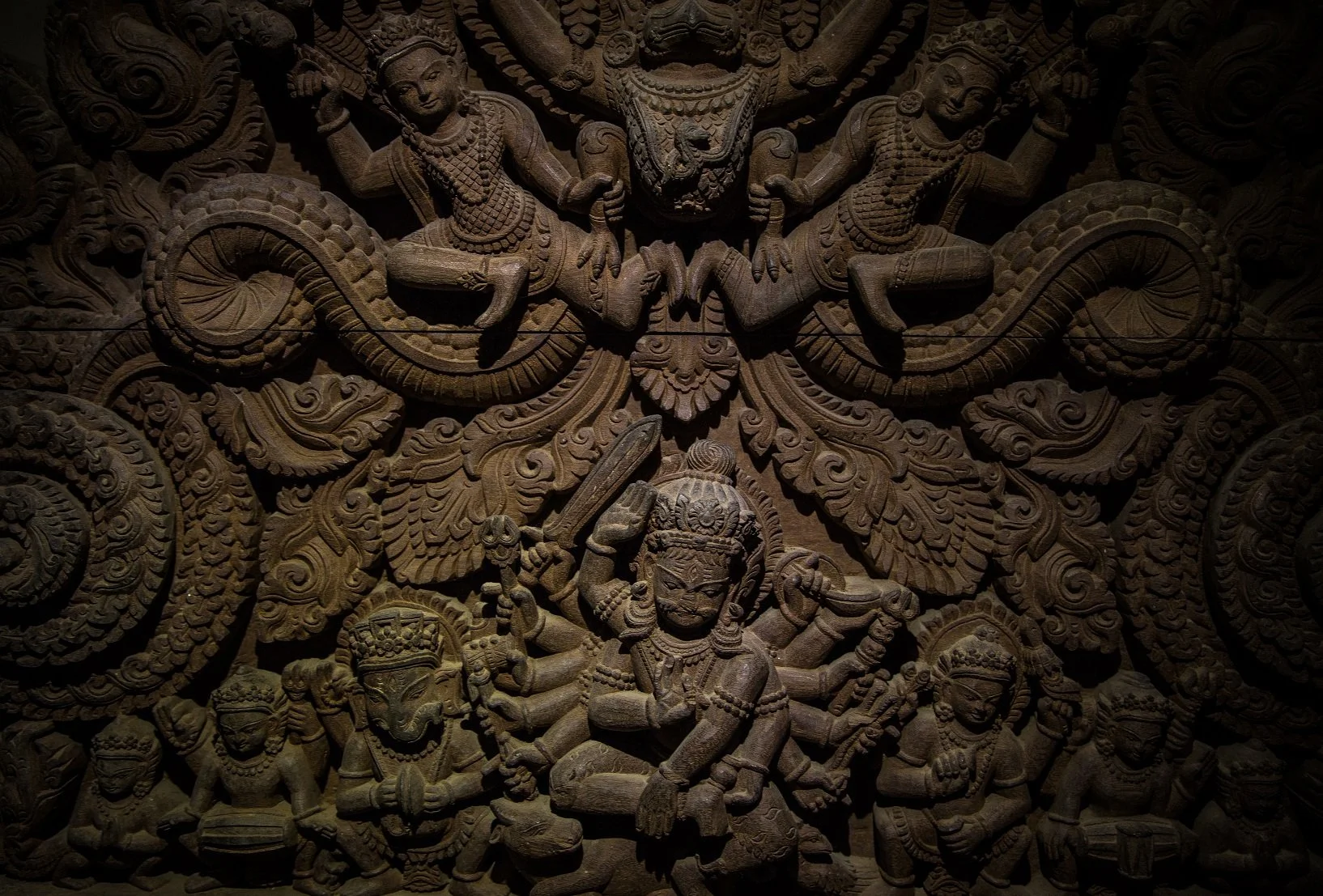
Dharapani is where we put our hiking poles and boots away (unless you’ve chosen to extend the trek and are following the Annurpuna Circuit up and over the Thorung La pass) and get into a private vehicle for the drive out of the mountains. It’s a long (5-6hr), but spectacular, drive to the beautiful, quiet hill town of Bandipur. Filled with carefully restored 19th Century mansions, the small town has become something of a favourite weekend getaway from Pokhara and Kathmandu. There are plenty of high quality cafes and resturants, boutique hotels and design shops. It’s a world away from the high mountain environment that you’ve just arrived from but it’s certainly a comfortable and welcome change. We spend the night in one of the towns top boutique heritage properties.
Day 17: Drive to Kathmandu
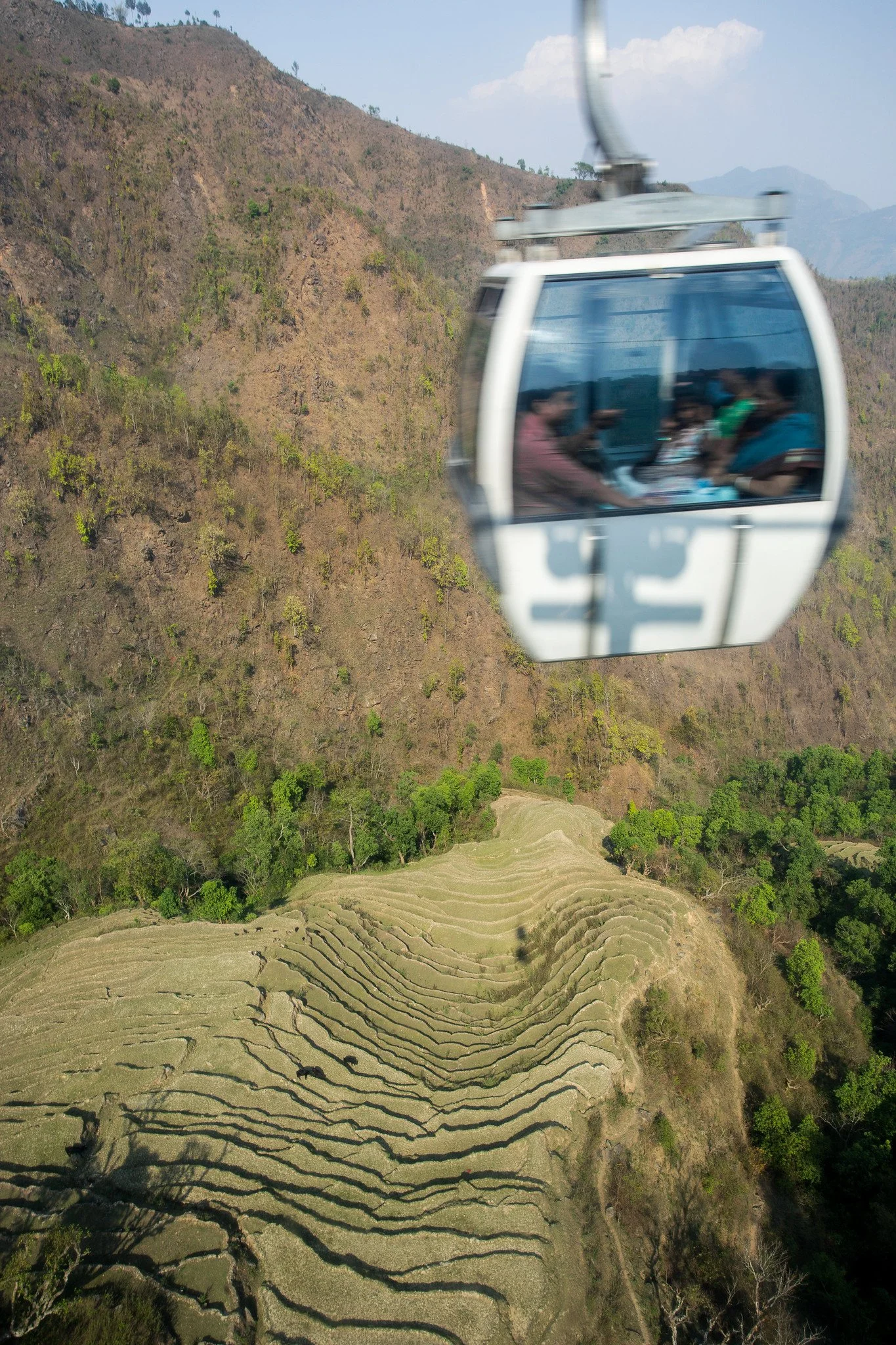
After a morning spent exploring Bandipur we start the five hour drive back to Kathmandu. If time allows then on the way we will stop to take the cable car up to the wish fulfilling Hindu temple complex of Manakamana. At times there can be tens of thousands of pilgrims here from across Nepal and India. We will then continue our journey onto Nepal arriving back in the city in early evening.
Overnight in Kathmandu.
Day 18: Kathmandu
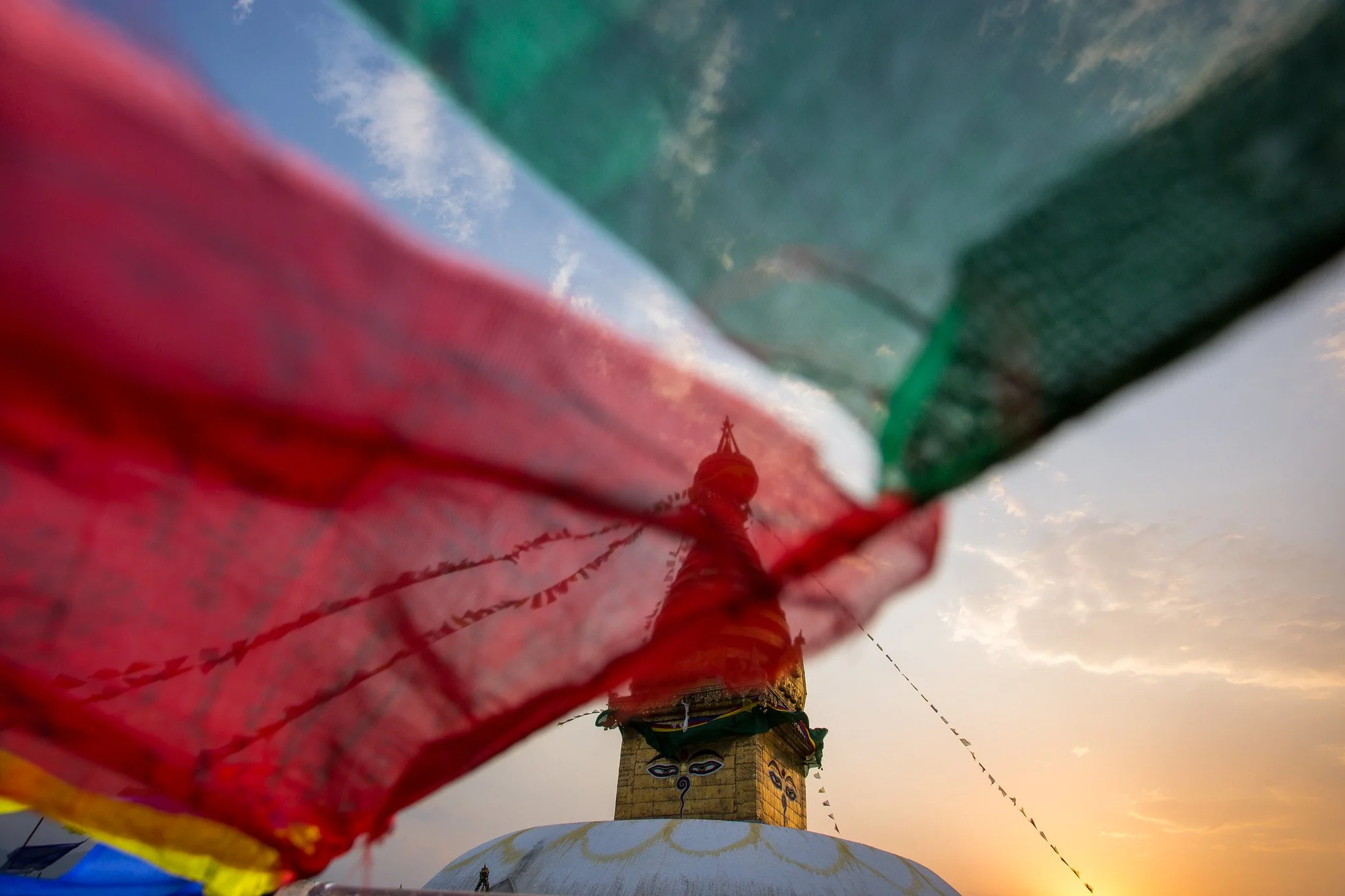
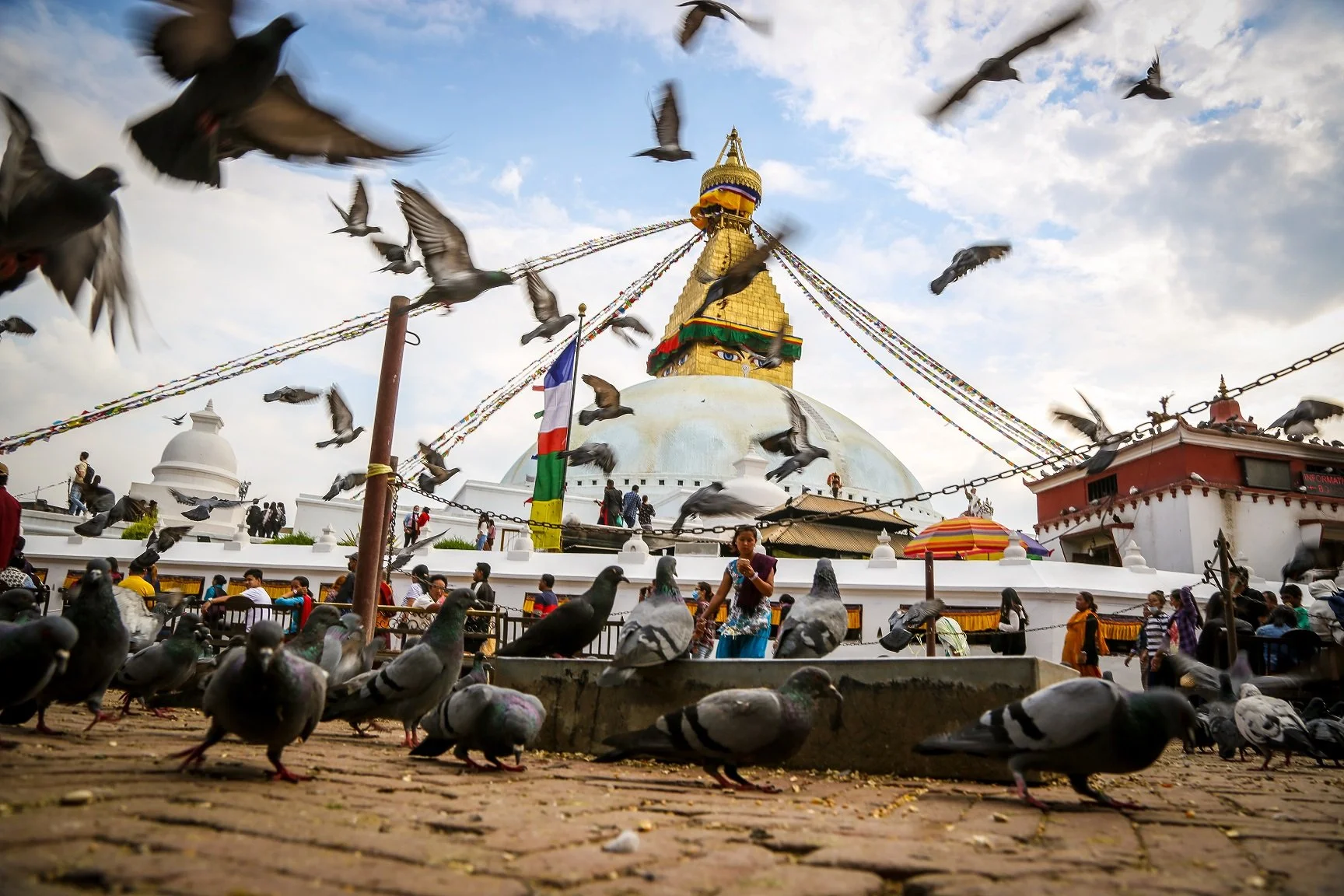
We spend our last day in Nepal exploring Kathmandu. In the morning we head to the historic centre of the city, Durbar Square which is full of temples, shrines and palaces, including that of the Kumari, or the Living Goddess. We then head a short way out of town to visit the two most important religious sites of Kathmandu. First, we go to the Pashupatinath Temple, which is an important riverside Hindu pilgrimage site and then to the Boudhanath stupa, which is arguably the most important Tibetan Buddhist pilgrimage site outside of Tibet and, in our opinion, one of the most magical religious sites in all of Asia.
Overnight Kathmandu.
Day 19: Fly home
This tour ends the morning after our return to Kathmandu. If you are flying out on the morning of day twenty-two then we will provide an airport transfer for you. Tour ends on arrival at the airport. If you are not leaving Nepal on the morning of day nineteen then the tour ends after breakfast on day nineteen. We can also provide further tours and treks in Nepal as well as elsewhere in the Himalaya and southern Asia.