The Wildebeest Festival
The lead animal was twitching and snorting, his hooves kicking up the dust. He seemed uncertain. Crouching forward ready to jump and then easing up again and backing away. For a half hour this went on. Poised and ready, nervous and dithering. You could almost feel the indecision in the air. Should I jump? Is it safe? And then, perhaps encouraged by those waiting behind him. Or, perhaps pushed. He jumped. The impact of his splayed legs hitting the water seemed to flick a switch and suddenly they all came. At first they jumped by the dozen, but within seconds it seemed hundreds were pouring down the river bank and the air was thick with dust and the bleating of terror. The churning waters swept many downstream to their doom and then, as the waters turned thick with mammalian blood, the crocodiles seemed to rise from nowhere and strike.
I was on the northern banks of the Mara River on the Kenya-Tanzania border watching the first big herds of wildebeest risk it all in order to cross from Tanzania’s now dry and parched Serengeti National Park to the lush, rain-fed grasses of Kenya’s Masai Mara National Reserve.
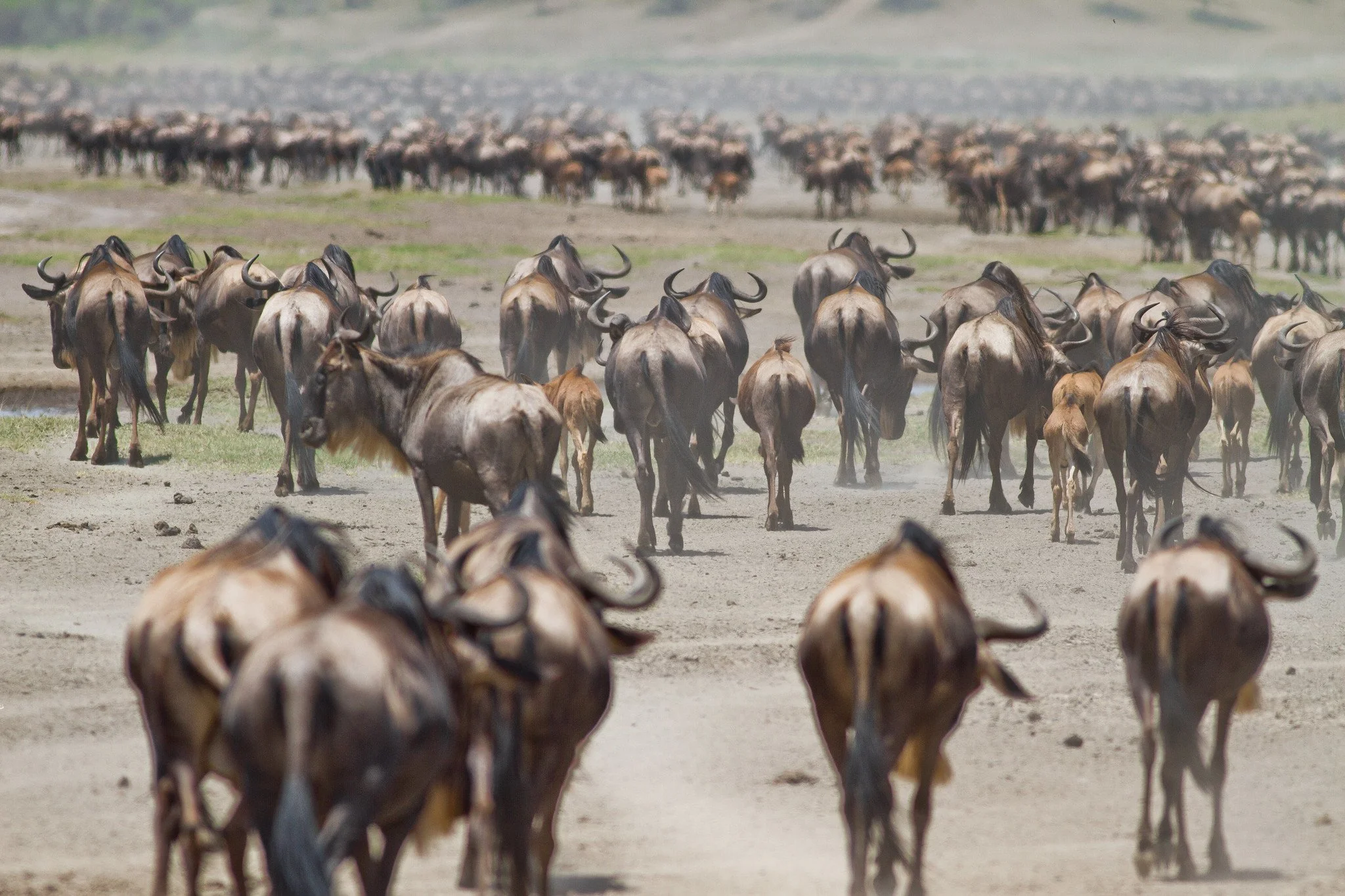
A large herd of wildebeest moves north through the Serengeti.
Thanks to countless wildlife documentaries, East Africa’s migration of the wildebeest (as well, to a lesser degree, zebra and other antelopes) has come to be considered one of the great spectacles of the natural world. Few who’ve watched the wildebeest launch themselves into the Mara River would disagree. But there’s so much more to the migration than those few dramatic, and often deadly, moments in the angry river. But before we go any further let’s get a few geographical facts straight. People often talk of Tanzania’s Serengeti and Kenya’s Masai Mara as if they were different, unconnected places, but they are in fact a single eco-system. Not just that but the areas surrounding, and in the case of Tanzania in particular, extending quite some way outside of these two protected areas, are also a part of the same, greater Serengeti eco-system.
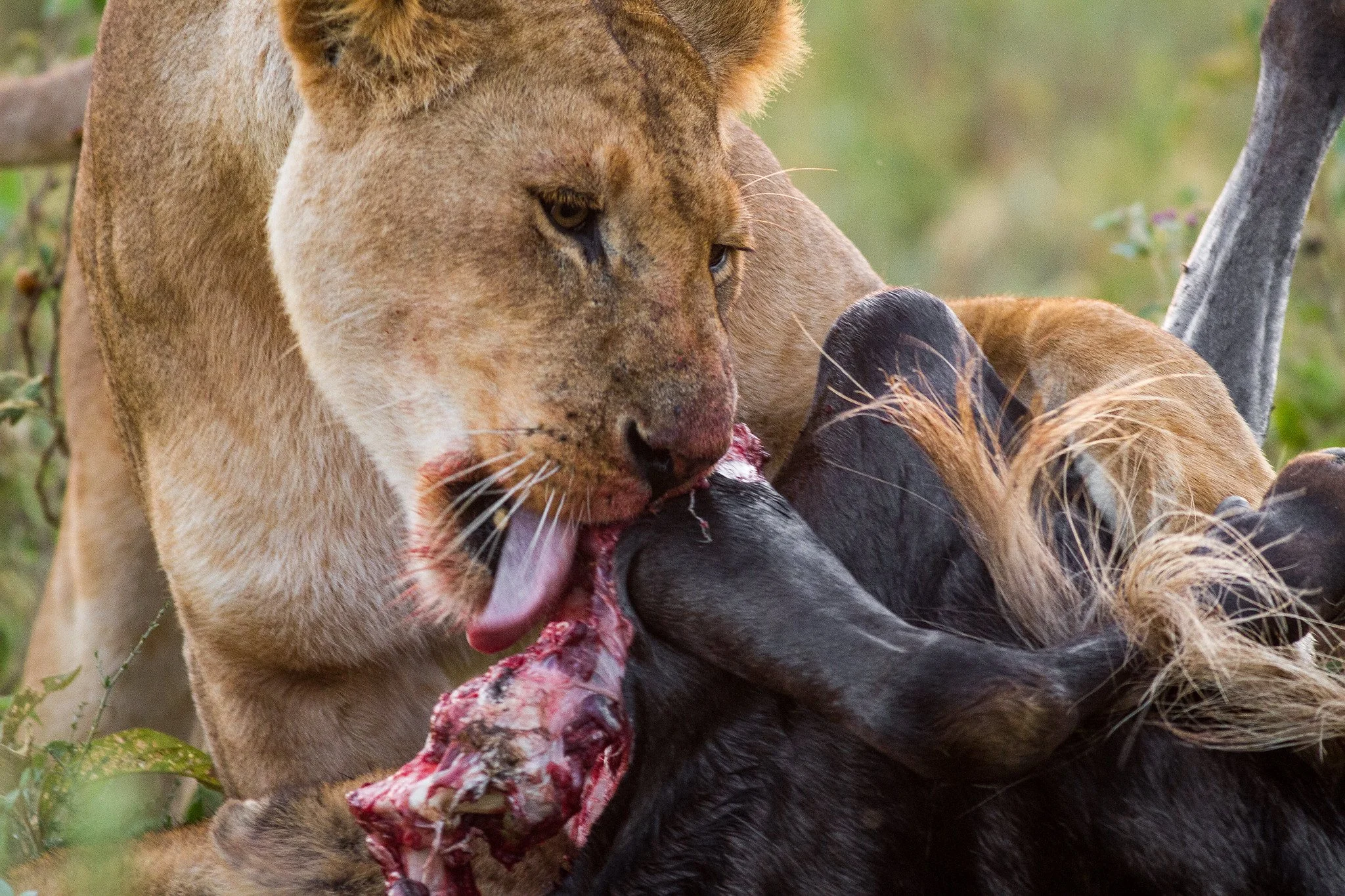
This particular wildebeest isn’t having the best of mornings.
Today the area is known as the home of the safari and in a few short days a visitor here can expect to be overwhelmed with sightings of tawny coloured lions lazing under bushes, cheetah streaking over the grass plains, elephants plodding under a setting sun and hyenas cackling in the night. But it’s the opportunity to see the life and death drama of the wildebeest migration that is for many the real reason to visit. And, for many people, the wildebeest migration essentially means watching the masses crossing the Mara River. But this river crossing, which occurs only at very specific times in around June-July and September-October (it’s all rain dependent), has become so symbolic of the migration that most people don’t realise that the migration is a year round circular movement that encompasses the entire Serengeti eco-system. The cycle begins in about January-February on the short grass plains in the far southeastern corner of the Serengeti. It’s here, over the space of a couple of weeks, that the wildebeest give birth. If you can’t be witness to the river crossings then this is the next best thing. All those wobbly-on-the-feet new born wildebeest provide easy pickings for the large numbers of big cats that live in this area. Slowly, as the rains fall and new grass starts sprouting further north (they like to eat this soft, nutritious fresh grass) the wildebeest start moving. The exact route they take can’t be predicted, but they rarely travel as one single mass and instead break down into different herds (which can be many thousands strong) which move through different areas of the Serengeti. Five months or so after giving birth they cross the Mara River into Kenya where they spend three or four months before the rains start in the southern Serengeti and they begin the long carnivore-filled journey back to the birthing grounds where the cycle begins anew.
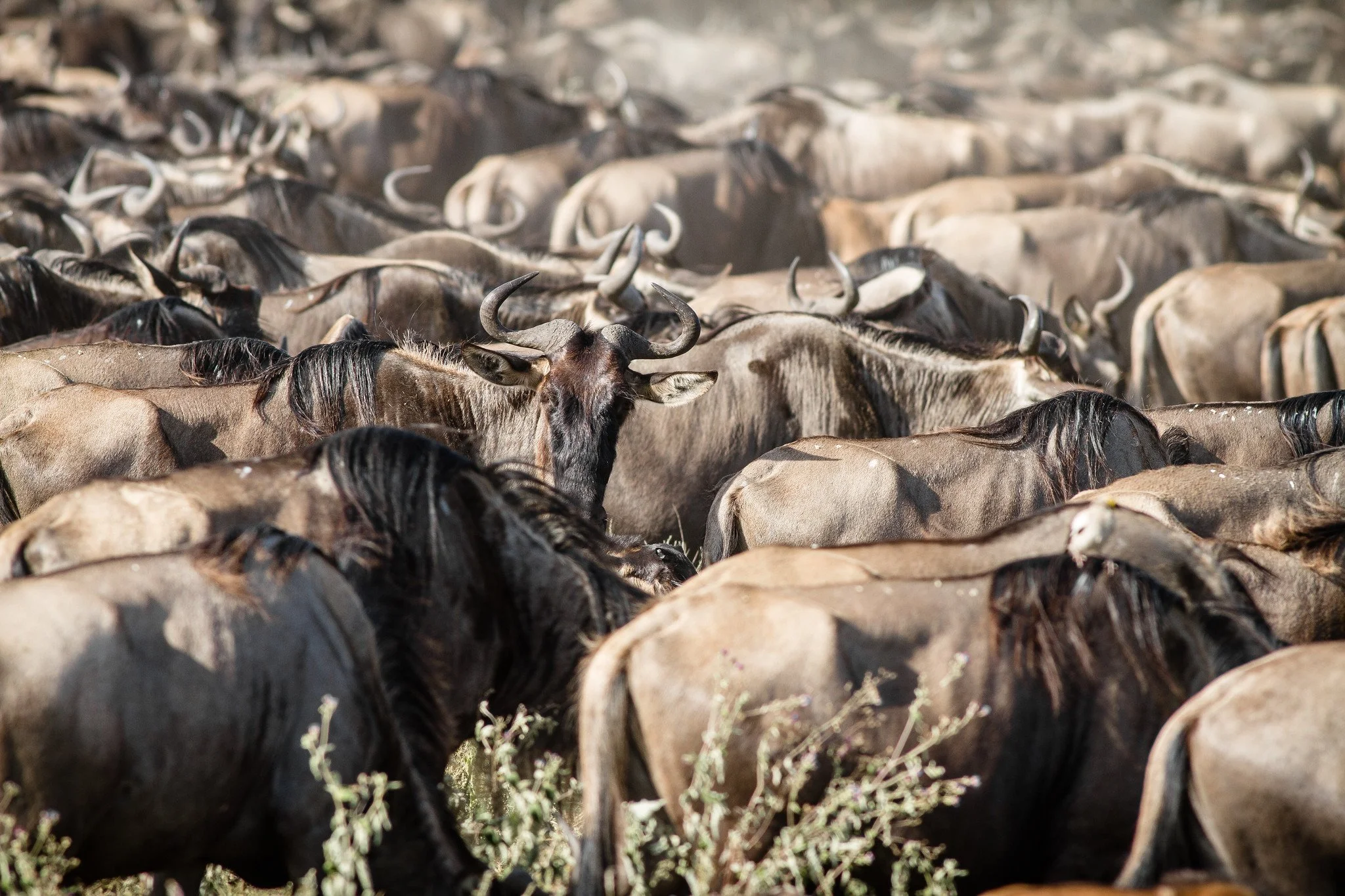
Come to Kenya with Samgai Journeys between early July and early October to enjoy wildlife spectacles like this.
We tend to think of the migration, and the Serengeti as a whole, as a timeless and unchanging paradise for wildlife largely untouched by man, but the truth is far more complicated and in the grasslands where humanity grew up our touch has always been felt. Perhaps one of the most stark recent examples of this concerns the migration itself. Across the world the diversity and quantity of wildlife is generally decreasing at a worrying rate. It might therefore come as a surprise to many to hear that over the last fifty years the number of wildebeest present in the Serengeti eco-system has actually grown enormously. Due to a lack of written records we can’t be sure what the wildebeest migration looked like prior to around 1880, but what we do know is that by the late 1800’s right through to the late 1960’s there were very few wildebeest in the Serengeti. The reason for this was rinderpest. Rinderpest is, or rather was, an infectious viral disease of cattle and other ungulates (which in East Africa means wildebeest, buffalo, giraffe and various antelope), which can work its way through herds very quickly and with deadly results. In 1887, rinderpest, which originated in Asia, was introduced to Ethiopia by cattle brought from India by the Italians. Within a decade the disease had swept across the continent and wiped out an estimated 95% of the cattle in Africa as well as huge numbers of other vulnerable wildlife including the Serengeti wildebeest (it also led to mass starvation among the people with the Maasai - those other symbols of the Serengeti - suffering greatly from famine). By the 1930’s there were probably only around 100,000 wildebeest left in the Serengeti. It wasn’t until scientists managed to wipe rinderpest out in the 1960’s that wildebeest numbers again started to climb and they climbed fast. Within twenty years the population had risen to around 1.4 million and, aside from a few drought inspired ups and downs, it’s not really changed much since.
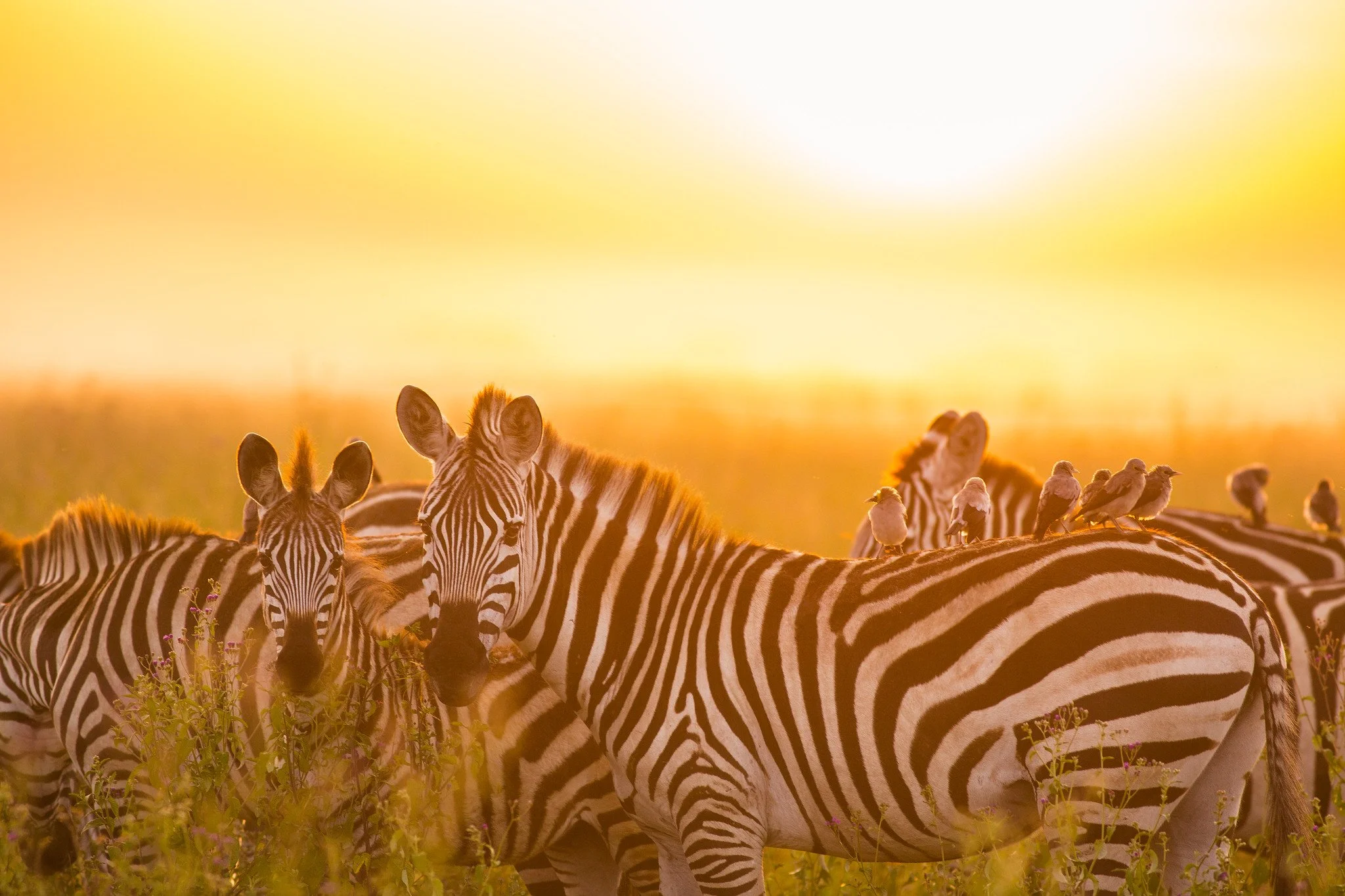
Wildebeest aren’t the only animals in the migration masses. You will see plenty of zebra on any Samgai Journeys Kenya journey.
Despite the huge number of animals involved actually finding the wildebeest can at times be tricky. And this is one of the key things to remember when chasing the migration. Nature can’t be predicted. I’ve frequently driven through grasslands looking rich and ready one day, yet seen nothing more than a handful of zebra and topi. But twenty-four hours later that same green grass can be hidden under the hooves of ten thousand or more wildebeest. At times they can form a near solid black mass, heads down chewing and nibbling, stretching way off into the heat haze. A day later though and again the plain can be virtually empty with the knee high grass of a few hours earlier mowed down to its base and no other living creature visible save a few dung beetles tidying up the mess left by the passing wildebeest festival.
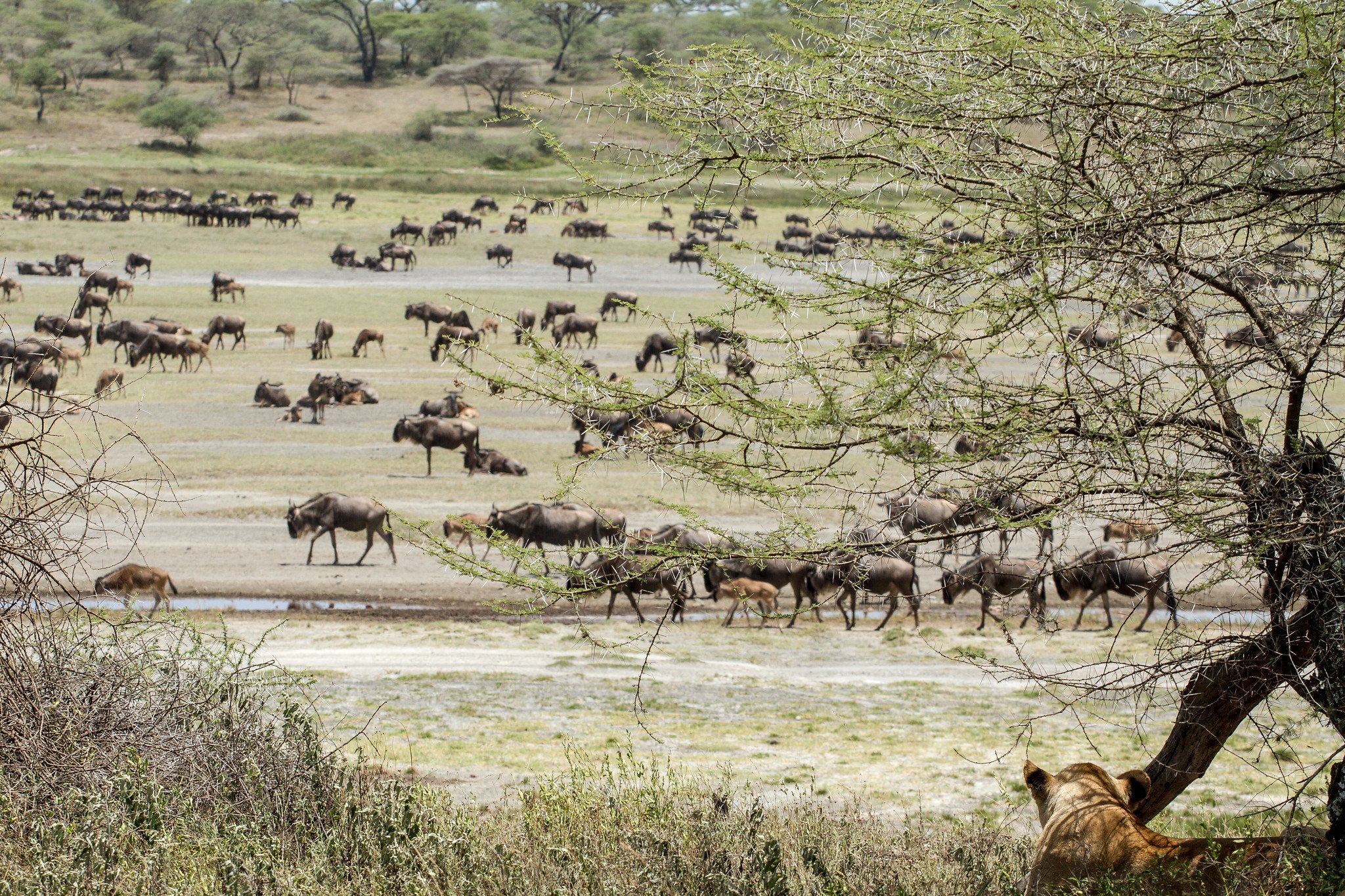
Take away dinner for a lioness.
Start planning your own wildebeest migration safari with one of our Kenya journeys.